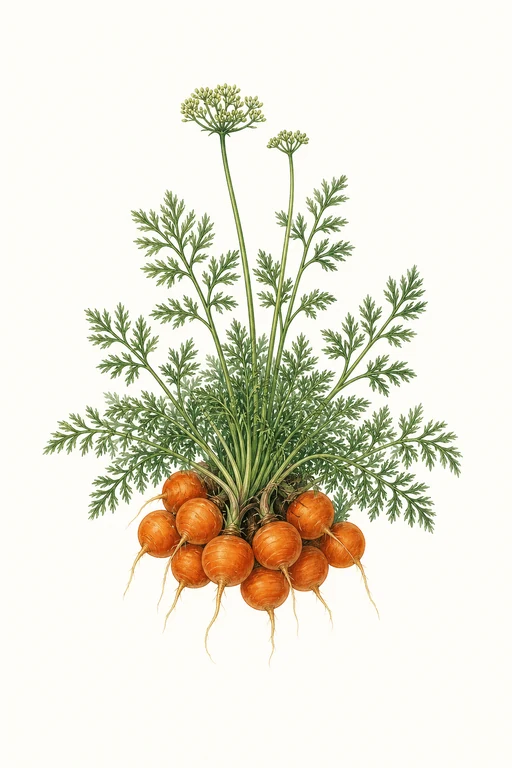
Thumbelina
Carrot
🌱 70d to harvest
Taproot
Sweet, carrot-bright flavor bursts from Thumbelina’s petite, round roots—tender and juicy with a fine-grained snap that feels alm…
Crop Dates
| Milestone | Date |
|---|---|
| Start Indoors | Direct Sow |
| Last Frost | Feb 9th |
| Transplant / Sow Outdoors | Feb 9th |
| Harvest Begins | Apr 20th |
| Harvest Ends | Dec 9th |
Crop Details
| Trait | Value |
|---|---|
| Days to Maturity | 70 |
| Sun Requirements | Full Sun |
| Growth Habit | Taproot |
| Support Needed | None |
| Planting Depth | Normal |
| Germination Temp (°F) | 70 |
| Min Soil Temp (°F) | 50 |
| Min Night Temp (°F) | 28 |
| Harden Off (days) | Not Required |
Recommended Companions
Frequently Asked Questions
What pest or disease problem commonly affects Daucus carota (carrots) like Thumbelina, and how do I manage it?
Carrot root fly can leave plants wilting and form dark, hollow tunnels in roots; check for eggs near the base and maggots under the soil. Use fine mesh row covers from sowing until the roots are established, and keep the bed weed-free to reduce attraction. If you see signs, remove and dispose of heavily damaged plants and avoid replanting carrots in the same spot for at least 3 years.
How often should I water Thumbelina carrots during the main growing phase, and what soil moisture level should I aim for?
During active root bulking (about weeks 4–10 after emergence), keep the top 1–2 in of soil consistently moist but not waterlogged. Water lightly and more frequently (often 1–2 times per week, depending on weather) and avoid letting the soil dry out completely between waterings. Uneven moisture encourages root cracking and misshapen roots, so a steady moisture routine matters most for a 70-day crop.
How can I tell when Thumbelina carrots are ready to harvest?
Start checking around day 60–70 by gently brushing soil away at the crown and looking for the variety’s expected shoulder size. Harvest when the roots are firm and have filled out, before they get woody—tug lightly; mature carrots come up with minimal resistance. For best flavor, harvest during cool weather and avoid leaving them in warm soil too long after they reach size.