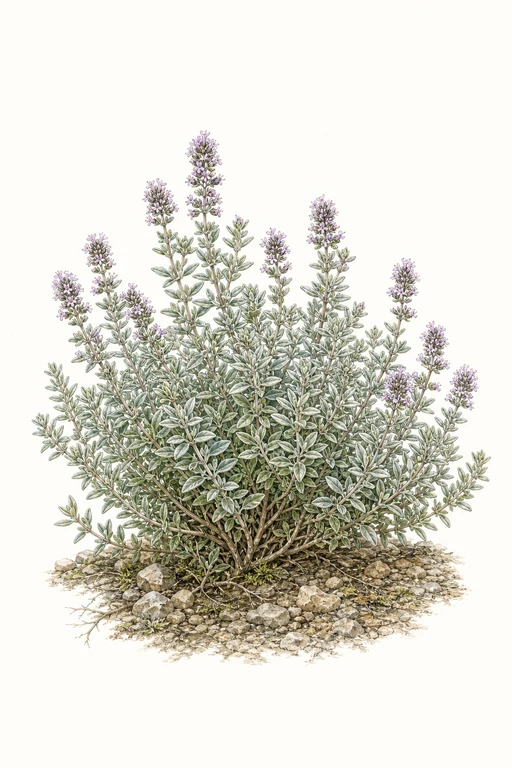
Thymus Vulgaris 'Argenteus
Thyme
🌱 60d to harvest
Upright
Aromatic as a sunlit hillside, Thymus vulgaris ‘Argenteus’ unfurls with silvery, softly downy foliage that glows against deep gre…
Crop Dates
| Milestone | Date |
|---|---|
| Start Indoors | Jan 19th |
| Last Frost | Feb 9th |
| Transplant / Sow Outdoors | Mar 23rd |
| Harvest Begins | May 22nd |
| Harvest Ends | Dec 9th |
Crop Details
| Trait | Value |
|---|---|
| Days to Maturity | 60 |
| Sun Requirements | Full Sun |
| Growth Habit | Upright |
| Support Needed | None |
| Planting Depth | Normal |
| Germination Temp (°F) | 70 |
| Min Soil Temp (°F) | 60 |
| Min Night Temp (°F) | 50 |
| Harden Off (days) | 7 |
Recommended Companions
Frequently Asked Questions
What pest or disease commonly affects Thymus vulgaris (Provence-type thyme), and how can I treat it?
The most common issue is fungal leaf spot/botrytis during cool, humid weather, often showing as dark spots or grayish growth on damp foliage. Remove affected sprigs, improve airflow, and avoid overhead watering; water at the soil line in the morning. If problems persist, use an appropriate fungicide labeled for edible herbs and follow label directions (especially keeping thyme harvest intervals in mind).
How often should I water Thymus vulgaris during active growth?
During the main growing phase, water only when the top 1–2 inches of soil feel dry; thyme prefers evenly moist only until established, then consistently on the dry side. Aim for deep, infrequent watering so excess water drains quickly, because Lamiaceae herbs like thyme are prone to root rot in soggy soil. If your soil stays wet or heavy, cut watering back further rather than trying to “hold” moisture with frequent sips.
How do I tell when Thymus vulgaris is ready to harvest?
Harvest once plants are well established and actively growing, typically around 60 days from sowing; you should be able to cut healthy stems with plenty of leaf mass. Take sprigs just before flowering for the best flavor, and avoid cutting into old, woody bare stems—leave at least a third of the growth so thyme can regrow. For ongoing use, snip small amounts regularly; the plant is ready for repeated harvests after it reaches a sturdy, bushy size.