
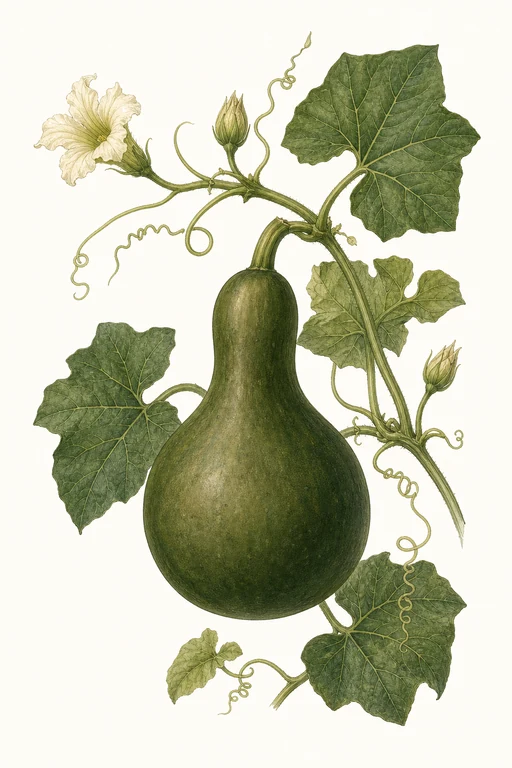
African Kettle
The African Kettle gourd captivates with its striking, deep green skin adorned with pale green stripes, evoking the essence of a lush summer garden.
This unique dipper gourd boasts a smooth, firm texture, making it an ideal choice for crafting decorative pieces or for use in traditional ceremonies. With its elongated shape and sturdy handle, it invites creativity and inspiration for gardeners looking to add a touch of artistry to their landscape.
Light: Full SunMaturity: 90 DaysHabit: Vine
Crop Dates : 2a
| Milestone | Date |
|---|---|
| Start Indoors | Apr 13th |
| Last Frost | May 25th |
| Transplant / Sow Outdoors | Apr 27th |
| Harvest Begins | Jul 26th |
| Harvest Ends | Aug 29th |
Crop Details
| Trait | Value |
|---|---|
| Days to Maturity | 90 |
| Sun Requirements | Full Sun |
| Growth Habit | Vine |
| Support Needed | Trellis |
| Planting Depth | Normal |
| Germination Temp (°F) | 75 |
| Min Soil Temp (°F) | 65 |
| Min Night Temp (°F) | 55 |
| Harden Off (days) | 10 |
Culinary Notes

Chef's Note
African Kettle is at its best when the fruit is young and green—firm flesh, mild flavor, and a clean bite that won’t turn to mush. If it’s past its prime, bitterness can creep in, so treat it like a zucchini cousin: cook hot and fast or pickle it before it matures.

Best Uses
- quick sauté or stir-fry of young, green fruit (fast heat, short cook)
- pickled slices to harness the firm bite
- stuffed halves baked until just tender
- soups/stews where it can hold shape without collapsing

Flavor Profile

Frequently Asked Questions
Why are my African Kettle (African kale/eggplant-type) leaves getting holes and sticky spots, and how can I control the most likely pests?
How often should I water African Kettle during peak growth to keep plants from wilting or stalling?
How do I tell when African Kettle is ready to harvest (and how long do I wait)?
Sowing Tips

Transplant Conditions
Wait until soil reaches 65°F and nights stay above 55°F before moving outdoors. Harden off for 10 days first.

Direct Sow Preferred
Sensitive roots — does not transplant well. If starting indoors, use biodegradable pots and disturb roots as little as possible when moving outdoors.
Expert Note

Start gourds indoors only if your spring is cool—keep seedlings warm and transplant once soil is reliably hot to avoid stunting and misshapen fruit.