
Chesnok Red
Chesnok Red brings a bold, lingering aroma with a rich, savory depth that feels almost velvety on the palate.
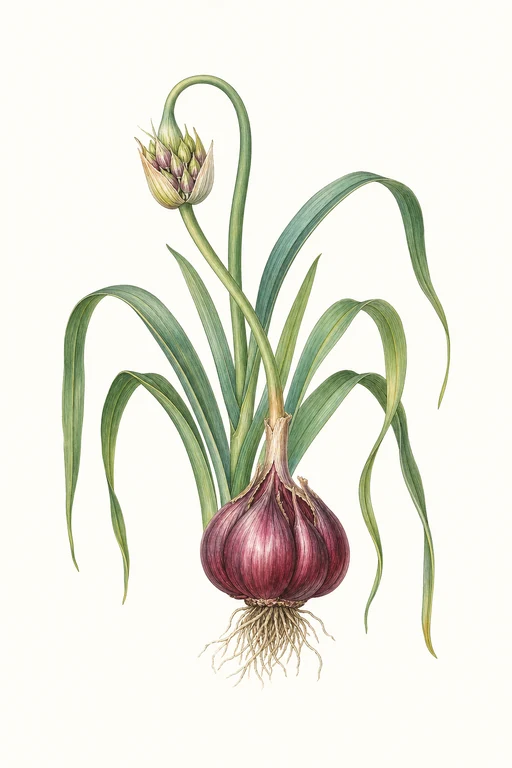
Expect medium-to-large cloves wrapped in striking reddish-purple skins, with a firm, creamy interior that roasts beautifully and lends itself to robust sauces and pickling brines. A hardneck favorite for gardeners who want dependable performance and a standout harvest with unmistakable character.
Light: Full SunMaturity: 180 DaysHabit: Bulbing
Location not set yet
Location not set yet
Enter your ZIP for local crop dates
Chesnok Red Planting Dates by USDA Zone
Estimated US hardiness-zone windows for sow, transplant, and harvest. Enter a US ZIP above for exact local dates, or open a zone below.
| Zone | Start Indoors | Sow / Transplant | Harvest |
|---|---|---|---|
| Zone 1a | Protected Environment Only | ||
| Zone 1b | Protected Environment Only | ||
| Zone 2a | Protected Environment Only | ||
| Zone 2b | Protected Environment Only | ||
| Zone 3a | Protected Environment Only | ||
| Zone 3b | Protected Environment Only | ||
| Zone 4a | Protected Environment Only | ||
| Zone 4b | Protected Environment Only | ||
| Zone 5a | Protected Environment Only | ||
| Zone 5b | Protected Environment Only | ||
| Zone 6a | Protected Environment Only | ||
| Zone 6b | Protected Environment Only | ||
| Zone 7a | Direct Sow | Feb 9th | Aug 8th – Oct 20th |
| Zone 7b | Direct Sow | Jan 30th | Jul 29th – Oct 28th |
| Zone 8a | Direct Sow | Jan 21st | Jul 20th – Nov 5th |
| Zone 8b | Direct Sow | Jan 12th | Jul 11th – Nov 12th |
| Zone 9a | Direct Sow | Dec 26th | Jun 24th – Nov 26th |
| Zone 9b | Direct Sow | Dec 1st | May 30th – Dec 9th |
| Zone 10a | — | Oct 1st | Feb 28th – Feb 28th |
| Zone 10b | — | Oct 1st | Feb 28th – Feb 28th |
| Zone 11a | — | Oct 1st | Feb 28th – Feb 28th |
| Zone 11b | — | Oct 1st | Feb 28th – Feb 28th |
| Zone 12a | — | Oct 1st | Feb 28th – Feb 28th |
| Zone 12b | — | Oct 1st | Feb 28th – Feb 28th |
| Zone 13a | — | Oct 1st | Feb 28th – Feb 28th |
| Zone 13b | — | Oct 1st | Feb 28th – Feb 28th |
Crop Details
| Trait | Value |
|---|---|
| Days to Maturity | 180 |
| Sun Requirements | Full Sun |
| Growth Habit | Bulbing |
| Support Needed | None |
| Planting Depth | Normal |
| Germination Temp (°F) | 50 |
| Min Soil Temp (°F) | 40 |
| Min Night Temp (°F) | 28 |
| Harden Off (days) | Not Required |
Culinary Notes

Chef's Note
Chesnok Red hardneck has that classic lingering garlic perfume—sharp in the raw bite, then buttery and almost silky once heat softens the clove. It’s a garlic you choose when you want the flavor to hold up in sauces, not just fade into the background.

Best Uses
- slow-roasted whole heads for spreadable, caramel-lean flavor
- chopped and sautéed as the flavor base for tomato sauces and braises
- quick pickle brines for crisp, punchy tang (especially when halved)
- garlic-forward aioli or crema where the mellowed cloves stay creamy instead of harsh

Flavor Profile

Kitchen Pairings
Frequently Asked Questions
What’s the most common disease problem for Allium sativum (Chesnok Red garlic), and how do I manage it?
How often should I water Allium sativum during its main growth phase, and what soil moisture level should I keep?
How can I tell when Chesnok Red garlic is ready to harvest?
Sowing Tips

Transplant Conditions
Wait until soil reaches 40°F and nights stay above 28°F before moving outdoors.
Expert Note

Plant individual cloves (pointed end up) in fall 6–8 weeks before your average first fall frost for best bulb formation and to overwinter cleanly.