
Artichaut de Nice
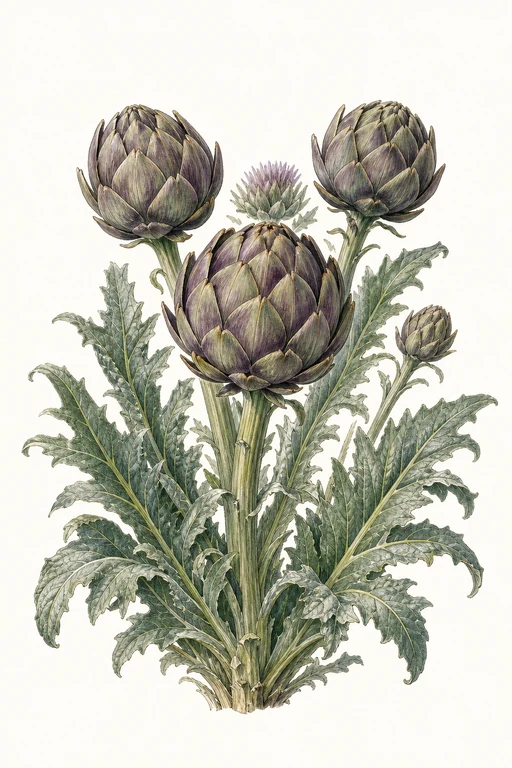
Unfurling from tight, armor-plated bracts, Artichaut de Nice delivers a lush, nutty-sweet flavor with a tender, succulent heart that feels velvety to the palate.
The globes mature in a stately, uniform form—deeply textured and richly colored—so they’re as satisfying to grow as they are to savor. Ideal for roasting and steaming, Artichaut de Nice shines in warm dips and savory sauces, and its firm bracts hold beautifully for pickling-style preparations.
Light: Full SunMaturity: 120 DaysHabit: Upright
Crop Dates : 3a
| Milestone | Date |
|---|---|
| Start Indoors | Mar 6th |
| Last Frost | May 15th |
| Transplant / Sow Outdoors | May 8th |
| Harvest Begins | Sep 5th |
| Harvest Ends | Sep 1st |
Crop Details
| Trait | Value |
|---|---|
| Days to Maturity | 120 |
| Sun Requirements | Full Sun |
| Growth Habit | Upright |
| Support Needed | None |
| Planting Depth | Normal |
| Germination Temp (°F) | 70 |
| Min Soil Temp (°F) | 50 |
| Min Night Temp (°F) | 40 |
| Harden Off (days) | 7 |
Culinary Notes

Chef's Note
This Nice-style globe artichoke leans into nutty-sweet nuttiness with a bitterness that softens into something silky at the stem and heart. It holds its texture under roasting and steaming, so you get that satisfying bract-meat bite without the whole thing turning mushy in a hot dip.

Best Uses
- steam or boil then pull bracts for hot, spoonable dips
- roast until the edges bronze and the center turns creamy
- warm reductions (butter-lemon, wine-garlic-free style) for coating pasta or potatoes
- quick-pickle or vinegar-style preparations where firm bracts stay snappy

Flavor Profile

Kitchen Pairings
Frequently Asked Questions
Why are my Artichaut de Nice plants getting powdery white spots and dying back at the edges, and what should I do?
How often should I water Artichaut de Nice during the main growing phase to keep the heads forming well?
How can I tell when Artichaut de Nice is ready to harvest?
Sowing Tips

Transplant Conditions
Wait until soil reaches 50°F and nights stay above 40°F before moving outdoors. Harden off for 7 days first.
Expert Note

Start seeds early (or buy transplants) and transplant into well-drained soil, keeping the crown at/just above the soil line for the best bud set.