
Aster
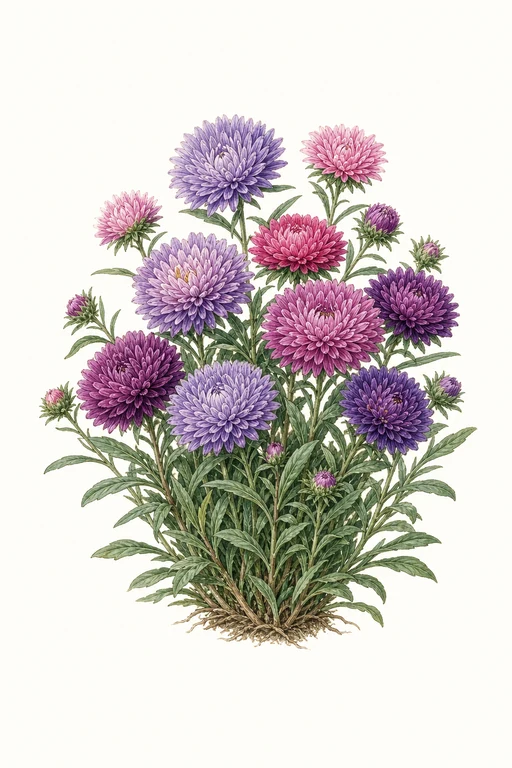
Fragrant, densely layered blooms of Aster arrive like miniature pom-poms—cool, velvety petals in a riot of jewel tones that hold their shape with a graceful, long-lasting presence.
The flowers are richly double and satisfyingly full, creating a lush, cushiony texture in the garden from midsummer into early fall. A dwarf double aster that shines in borders and containers, Aster is made for gardeners who want instant color and a showy, heirloom-style display all season long.
Light: Full SunMaturity: 90 DaysHabit: Upright
Planting schedules and alerts are optimized for Columbus (Zone 6b).
Crop Dates
| Milestone | Date |
|---|---|
| Start Indoors | Mar 21st |
| Last Frost | Apr 25th |
| Transplant / Sow Outdoors | Apr 18th |
| Harvest Begins | Jul 17th |
| Harvest Ends | Oct 16th |
Crop Details
| Trait | Value |
|---|---|
| Days to Maturity | 90 |
| Sun Requirements | Full Sun |
| Growth Habit | Upright |
| Support Needed | None |
| Planting Depth | Normal |
| Germination Temp (°F) | 65 |
| Min Soil Temp (°F) | 45 |
| Min Night Temp (°F) | 45 |
| Harden Off (days) | 6 |
Culinary Notes

Chef's Note
Edible dwarf double asters are all about the petal—layered and slightly chewy with a gentle floral perfume. Treat them like a garnish and a flavoring agent: use just enough so their cool sweetness reads clearly against bright citrus and clean dairy.

Best Uses
- freshly scattered over green salads to add a cushiony petal texture
- steeping into light syrups or floral infusions for delicate desserts
- folding petals into compound butter for a fragrant finish
- garnishing chilled drinks or fruit—use sparingly so the perfume doesn’t get loud

Flavor Profile

Kitchen Pairings
Frequently Asked Questions
How do I manage powdery mildew on asters in mid-summer?
How often should I water asters during their main growing phase (after establishment)?
How can I tell when my asters are ready to harvest (for cut flowers)?
Sowing Tips

Transplant Conditions
Wait until soil reaches 45°F and nights stay above 45°F before moving outdoors. Harden off for 6 days first.
Expert Note

For best compact plants and abundant blooms, keep seedlings evenly moist and avoid overheating; start earlier in cool weather and transplant once nights are reliably mild.