
Baby
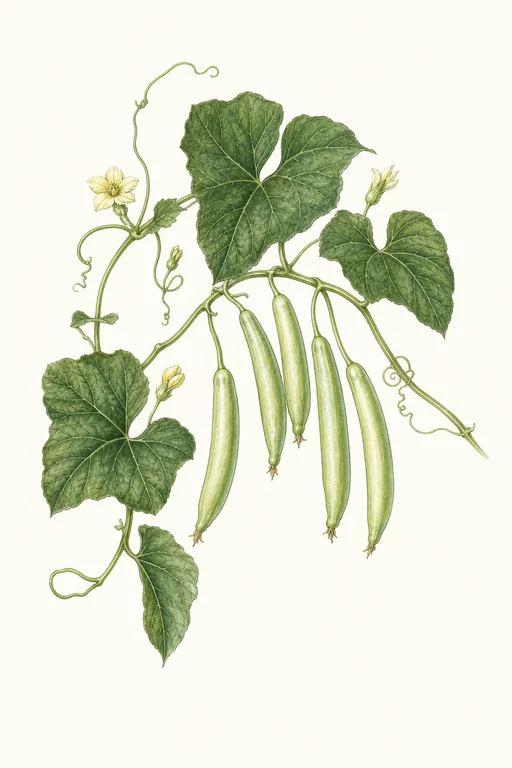
Tender, baby-sized snake gourds arrive with a silky, pale-green sheen and a pleasantly mild, cucumber-like flavor that feels fresh and clean.
Their slender, gently tapering bodies stay crisp and juicy, making them especially appealing for quick roasting, bright fresh use, and vibrant pickling where their delicate texture shines. Grow for a steady harvest of petite fruits—55 days to maturity—ideal for gardeners who love frequent, garden-to-plate delights from a vigorous vine.
Light: Full SunMaturity: 55 DaysHabit: Vine
Planting schedules and alerts are optimized for Columbus (Zone 6b).
Crop Dates
| Milestone | Date |
|---|---|
| Start Indoors | Direct Sow |
| Last Frost | Apr 25th |
| Transplant / Sow Outdoors | May 9th |
| Harvest Begins | Jul 3rd |
| Harvest Ends | Oct 16th |
Crop Details
| Trait | Value |
|---|---|
| Days to Maturity | 55 |
| Sun Requirements | Full Sun |
| Growth Habit | Vine |
| Support Needed | Trellis |
| Planting Depth | Normal |
| Germination Temp (°F) | 75 |
| Min Soil Temp (°F) | 65 |
| Min Night Temp (°F) | 55 |
| Harden Off (days) | 10 |
Culinary Notes

Chef's Note
Baby snake gourd is built for speed: its tender, watery crunch turns silky only when you let it—so hit it hot and brief for caramelized edges and a still-snap texture. The mild cucumber-clean flavor loves acid and spice, making it an easy win for pickles, quick stir-fries, or crisp-edged roasting.

Best Uses
- quick hot-roast/char on high heat for crisp edges while staying juicy
- thin ribbons or baton-cut in fresh salads with a sharp vinaigrette
- quick pickles/brines for a snappy, pale-green crunch
- stir-fry with ginger and garlic where they stay bright, not soft

Flavor Profile

Frequently Asked Questions
What common pest or disease affects Lagenaria siceraria (snake gourd/baby gourds), and how can I control it at home?
How often should I water Lagenaria siceraria during active vine growth?
How do I tell when Lagenaria siceraria baby gourds are ready to harvest?
Sowing Tips

Transplant Conditions
Wait until soil reaches 65°F and nights stay above 55°F before moving outdoors. Harden off for 10 days first.

Direct Sow Preferred
Sensitive roots — does not transplant well. If starting indoors, use biodegradable pots and disturb roots as little as possible when moving outdoors.
Expert Note

For the best “baby” size, harvest frequently at ~8–12 inches while the rind is still tender and thin.