
Bhut Jolokia White
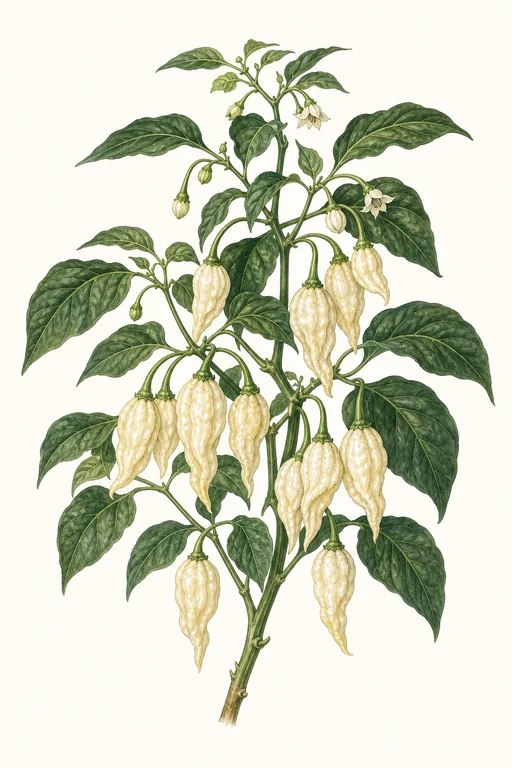
A slow-building blaze with a bright, floral snap—Bhut Jolokia White brings an arresting, pale ivory-to-cream pepper that glows against deep green foliage.
The pods are slender and pendulous, with a smooth, taut skin and a crisp, juicy bite that delivers intense superhot heat and a clean, peppery edge. Grow it for bold fresh use and for fiery sauces, salsas, and pickling where its distinctive pale color and dramatic heat can shine.
Light: Full SunMaturity: 120 DaysHabit: Bush
Location not set yet
Location not set yet
Enter your ZIP for local crop dates
Bhut Jolokia White Planting Dates by USDA Zone
Estimated US hardiness-zone windows for sow, transplant, and harvest. Enter a US ZIP above for exact local dates, or open a zone below.
| Zone | Start Indoors | Sow / Transplant | Harvest |
|---|---|---|---|
| Zone 1a | Protected Environment Only | ||
| Zone 1b | Protected Environment Only | ||
| Zone 2a | Protected Environment Only | ||
| Zone 2b | Protected Environment Only | ||
| Zone 3a | Protected Environment Only | ||
| Zone 3b | Mar 24th | Jul 14th | Nov 11th – Sep 21st |
| Zone 4a | Mar 20th | Jul 10th | Nov 7th – Sep 24th |
| Zone 4b | Mar 18th | Jul 8th | Nov 5th – Sep 27th |
| Zone 5a | Mar 13th | Jul 3rd | Oct 31st – Sep 30th |
| Zone 5b | Mar 9th | Jun 29th | Oct 27th – Oct 5th |
| Zone 6a | Mar 6th | Jun 26th | Oct 24th – Oct 10th |
| Zone 6b | Feb 28th | Jun 20th | Oct 18th – Oct 16th |
| Zone 7a | Feb 23rd | Jun 15th | Oct 13th – Oct 20th |
| Zone 7b | Feb 13th | Jun 5th | Oct 3rd – Oct 28th |
| Zone 8a | Feb 4th | May 27th | Sep 24th – Nov 5th |
| Zone 8b | Jan 26th | May 18th | Sep 15th – Nov 12th |
| Zone 9a | Jan 9th | May 1st | Aug 29th – Nov 26th |
| Zone 9b | Dec 15th | Apr 6th | Aug 4th – Dec 9th |
| Zone 10a | Continuous Production | ||
| Zone 10b | Continuous Production | ||
| Zone 11a | Continuous Production | ||
| Zone 11b | Continuous Production | ||
| Zone 12a | Continuous Production | ||
| Zone 12b | Continuous Production | ||
| Zone 13a | Continuous Production | ||
| Zone 13b | Continuous Production | ||
Crop Details
| Trait | Value |
|---|---|
| Days to Maturity | 120 |
| Sun Requirements | Full Sun |
| Growth Habit | Bush |
| Support Needed | Stake |
| Planting Depth | Normal |
| Germination Temp (°F) | 80 |
| Min Soil Temp (°F) | 60 |
| Min Night Temp (°F) | 50 |
| Harden Off (days) | 10 |
Culinary Notes

Chef's Note
Bhut Jolokia White is the kind of heat that sneaks up on you—floral and bright first, then a serious capsaicin climb—so it deserves dishes with acidity to keep it sharp. Use it chopped or preserved in vinegar/oil where its pale color and crisp bite remain visually and texturally intact.

Best Uses
- fresh-chopped heat on citrusy ceviche or fruit-forward slaws
- fiery hot sauce where you want a bright, floral top note (not just burn)
- salsa—seeded for maximum snap, strained for a smoother glow
- quick pickling for pale, jeweled heat that stays crisp

Flavor Profile

Frequently Asked Questions
What is the most common disease issue for Capsicum chinense (Bhut Jolokia) and how do I control it?
How often should I water Bhut Jolokia during the main growing phase?
How can I tell when Bhut Jolokia (Capsicum chinense) is ready to harvest?
Sowing Tips

Transplant Conditions
Wait until soil reaches 60°F and nights stay above 50°F before moving outdoors. Harden off for 10 days first.
Expert Note

For superhots like White Ghost/Bhut Jolokia, keep soil consistently warm after transplant (not just past frost) and give full sun so flowers don’t drop.