
Big Heart
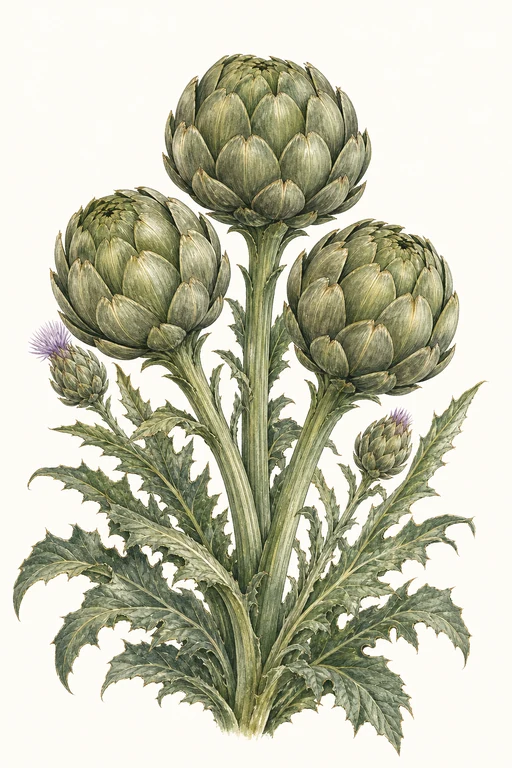
Sink your spoon into the promise of Big Heart artichokes—large, deeply cupped buds with a tender, meaty core and a softly nutty, green-sweet flavor.
The bracts form an impressive, heart-shaped silhouette, offering a satisfying bite from crisp outer leaves to a velvety, succulent center. Grow Big Heart for showstopping edible buds that shine in preparations where their lush texture and aromatic character are the star.
Light: Full SunMaturity: 90 DaysHabit: Rosette
Planting schedules and alerts are optimized for Columbus (Zone 6b).
Crop Dates
| Milestone | Date |
|---|---|
| Start Indoors | Mar 14th |
| Last Frost | Apr 25th |
| Transplant / Sow Outdoors | Apr 18th |
| Harvest Begins | Jul 17th |
| Harvest Ends | Oct 16th |
Crop Details
| Trait | Value |
|---|---|
| Days to Maturity | 90 |
| Sun Requirements | Full Sun |
| Growth Habit | Rosette |
| Support Needed | None |
| Planting Depth | Normal |
| Germination Temp (°F) | 70 |
| Min Soil Temp (°F) | 45 |
| Min Night Temp (°F) | 35 |
| Harden Off (days) | 7 |
Culinary Notes

Chef's Note
Big Heart is built for that spoon-meets-fork moment: large, deeply cupped buds with a meaty core that turns velvety without turning mushy. Use it when you want the bract-and-heart texture contrast—crisp outer leaves down to a tender, nutty center—so keep the seasoning bright (lemon, olive oil) and let the green sweetness do the talking.

Best Uses
- braised or steamed with lemon and olive oil for a clean, spoonable heart
- hot char/grill and serve with browned butter or aioli to highlight the smoky edges
- thin-sliced artichoke bottoms into warm pasta where they stay pleasantly firm
- stuffed whole or halved—built to hold a breadcrumb-cheese crust without collapsing

Flavor Profile

Kitchen Pairings
Frequently Asked Questions
What pest or disease commonly affects artichokes (Cynara cardunculus var. scolymus), and how can I manage it at home?
How often should I water artichokes during the main growing phase, and what soil moisture level should I aim for?
How do I tell when my artichokes (Cynara cardunculus var. scolymus) are ready to harvest?
Sowing Tips

Transplant Conditions
Wait until soil reaches 45°F and nights stay above 35°F before moving outdoors. Harden off for 7 days first.
Expert Note

Start plants early and give them consistent moisture—large heads form best when plants establish before summer heat ramps up.