
Birdhouse Gourd
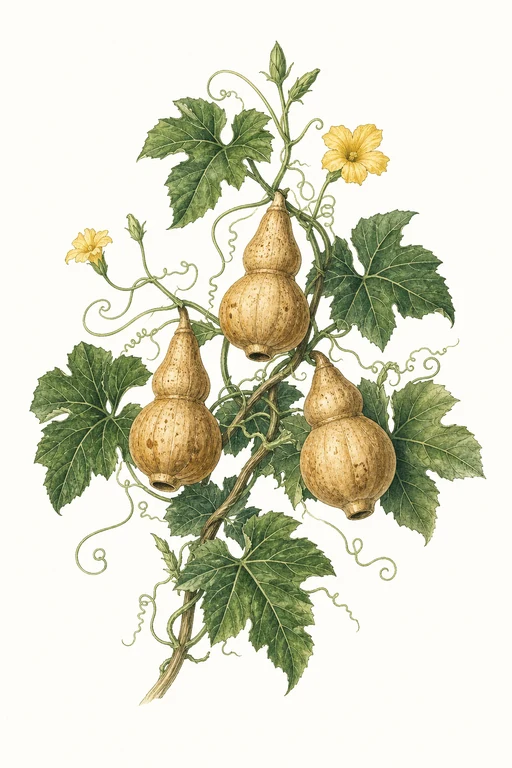
A slow-growing marvel with a delightfully dry, architectural charm: Birdhouse Gourd develops into compact, birdhouse-shaped forms with a firm, corky skin that matures to a warm, weathered tone.
The flesh stays pleasantly mild and custardy when young, while the fully cured shells become wonderfully sturdy for decorative use and seasonal projects. Grow it for its sculptural presence in the garden—vigorous vines, abundant coverage, and a harvest that feels like bringing home a little piece of folk art.
Light: Full SunMaturity: 110 DaysHabit: Vine
Planting schedules and alerts are optimized for Columbus (Zone 6b).
Crop Dates
| Milestone | Date |
|---|---|
| Start Indoors | Direct Sow |
| Last Frost | Apr 25th |
| Transplant / Sow Outdoors | May 9th |
| Harvest Begins | Aug 27th |
| Harvest Ends | Oct 16th |
Crop Details
| Trait | Value |
|---|---|
| Days to Maturity | 110 |
| Sun Requirements | Full Sun |
| Growth Habit | Vine |
| Support Needed | Trellis |
| Planting Depth | Normal |
| Germination Temp (°F) | 70 |
| Min Soil Temp (°F) | 65 |
| Min Night Temp (°F) | 55 |
| Harden Off (days) | 10 |
Culinary Notes

Chef's Note
Birdhouse gourd is a two-stage eater: the young flesh is mild and custardy, so you want fast heat and low fuss to keep it creamy. The cured shell goes wonderfully rigid as a container, but it’s not the starring edible part—save your knife work for the tender interior.

Best Uses
- cube young, tender flesh for quick sauté or roasting until creamy at the center
- steam or pan-blanch young pieces, then mash with butter/garlic for a custard-like side
- use the mature cured shell only as an edible-serving vessel (if cleaned properly) for brothy fillings
- make a simple purée/soup when harvested at the younger, flesh-forward stage

Flavor Profile

Frequently Asked Questions
What should I do if my birdhouse gourd vines get powdery mildew?
How often should I water birdhouse gourd during the main growing phase?
How can I tell when birdhouse gourds are ready to harvest?
Sowing Tips

Transplant Conditions
Wait until soil reaches 65°F and nights stay above 55°F before moving outdoors. Harden off for 10 days first.

Direct Sow Preferred
Sensitive roots — does not transplant well. If starting indoors, use biodegradable pots and disturb roots as little as possible when moving outdoors.
Expert Note

Soak seeds overnight and start germinating only when soil is reliably warm, then transplant after night temps stay above ~55°F to avoid slow, stunted growth.