
Black Hungarian
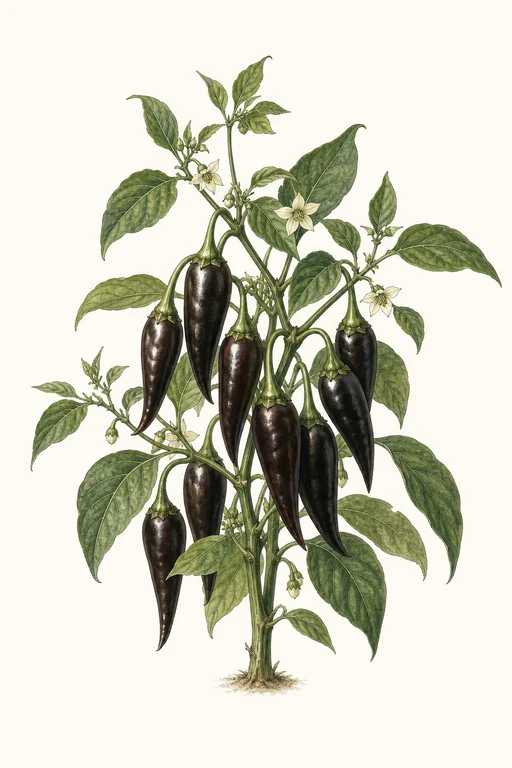
Sink your senses into Black Hungarian’s smoky, peppery aroma and the striking, near-black pods that ripen to a rich, glossy mahogany-brown.
The fruits are crisp and meaty with a gentle heat, ideal for pickling where their firm texture holds shape and their dark color deepens beautifully in the jar. Grow this standout for bold, tangy pepper flavor—an elegant addition to antipasto-style platters and briny preserves alike.
Light: Full SunMaturity: 75 DaysHabit: Bush
Crop Dates : 2a
| Milestone | Date |
|---|---|
| Start Indoors | Apr 6th |
| Last Frost | May 25th |
| Transplant / Sow Outdoors | Jul 20th |
| Harvest Begins | Oct 3rd |
| Harvest Ends | Aug 29th |
Crop Details
| Trait | Value |
|---|---|
| Days to Maturity | 75 |
| Sun Requirements | Full Sun |
| Growth Habit | Bush |
| Support Needed | Stake |
| Planting Depth | Normal |
| Germination Temp (°F) | 80 |
| Min Soil Temp (°F) | 60 |
| Min Night Temp (°F) | 50 |
| Harden Off (days) | 10 |
Culinary Notes

Chef's Note
Black Hungarian is built for that pickling sweet spot: firm, meaty pods that don’t collapse, carrying smoke and pepper with a gentle heat. Use vinegar to sharpen the flavor and let the mahogany-brown color do the heavy lifting on the platter.

Best Uses
- briny pickling where the firm flesh stays in tidy slices
- antipasto-style roasted or sautéed peppers for a smoky-sweet platter bite
- chopped into vinaigrette-forward sauces and relishes (where color looks as good as flavor)
- folded into hearty bean salads or charcuterie boards

Flavor Profile

Kitchen Pairings
Frequently Asked Questions
How do I handle blossom-end rot or fungal spotting on Black Hungarian peppers?
How often should I water Black Hungarian peppers during the 75-day main growing phase?
What signs show Black Hungarian peppers are ready to harvest at about 75 days?
Sowing Tips

Transplant Conditions
Wait until soil reaches 60°F and nights stay above 50°F before moving outdoors. Harden off for 10 days first.
Expert Note

Start seeds indoors with steady warmth, then transplant only after the soil reliably reaches 60°F+ for best establishment and fruiting.