
Blanchi
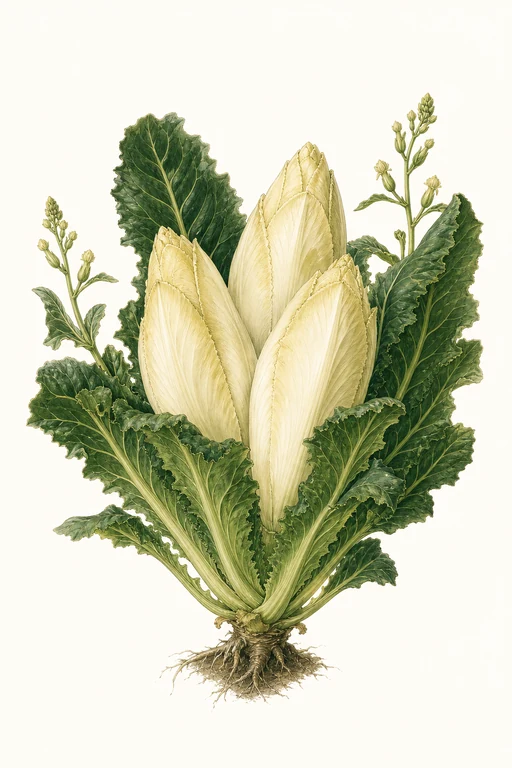
Silken blanched hearts unfurl in cool, pale tones, offering a gentle bitterness that feels refined rather than sharp.
Blanchi endive forms tight, upright heads with crisp, succulent texture—ideal for brightening salads and lending body to elegant, pale-green preparations. Grow it for a garden-to-table centerpiece that stays tender and beautifully structured through the season’s final stretch.
Light: Part SunMaturity: 70 DaysHabit: Rosette
Planting schedules and alerts are optimized for Columbus (Zone 6b).
Crop Dates
| Milestone | Date |
|---|---|
| Start Indoors | Mar 28th |
| Last Frost | Apr 25th |
| Transplant / Sow Outdoors | Apr 25th |
| Harvest Begins | Jul 4th |
| Harvest Ends | Oct 16th |
Crop Details
| Trait | Value |
|---|---|
| Days to Maturity | 70 |
| Sun Requirements | Part Sun |
| Growth Habit | Rosette |
| Support Needed | None |
| Planting Depth | Normal |
| Germination Temp (°F) | 70 |
| Min Soil Temp (°F) | 40 |
| Min Night Temp (°F) | 32 |
| Harden Off (days) | 6 |
Culinary Notes

Chef's Note
Blanchi endive lands in that sweet spot between lettuce and true bitter greens: it stays pale and tender but never turns mushy, so it can handle sharp lemon and fat without collapsing. Use it as the crunchy, elegant anchor—dress sparingly or warm it briefly so you keep that structured bite.

Best Uses
- shaved or halved endive salad dressed lightly so the leaves stay upright and snappy
- quick sauté or braise to soften edges while keeping a crisp bite
- wrap on a platter with warm vinaigrette or citrus-based dressing for a pale-green centerpiece
- top with melted cheese or a warm pan sauce where the bitterness balances richness

Flavor Profile

Kitchen Pairings
Frequently Asked Questions
What pest or disease most commonly affects Cichorium endivia (endive/chicory family), and how can I prevent it?
How often should I water Cichorium endivia during its main growing period?
How do I know when Cichorium endivia is ready to harvest?
Sowing Tips

Transplant Conditions
Wait until soil reaches 40°F and nights stay above 32°F before moving outdoors. Harden off for 6 days first.
Expert Note

For the crispest, least-bitter heads, keep soil consistently moist and (if desired) blanch by tying leaves together or using a cover for the final 1–2 weeks before harvest.