
Blue Daze
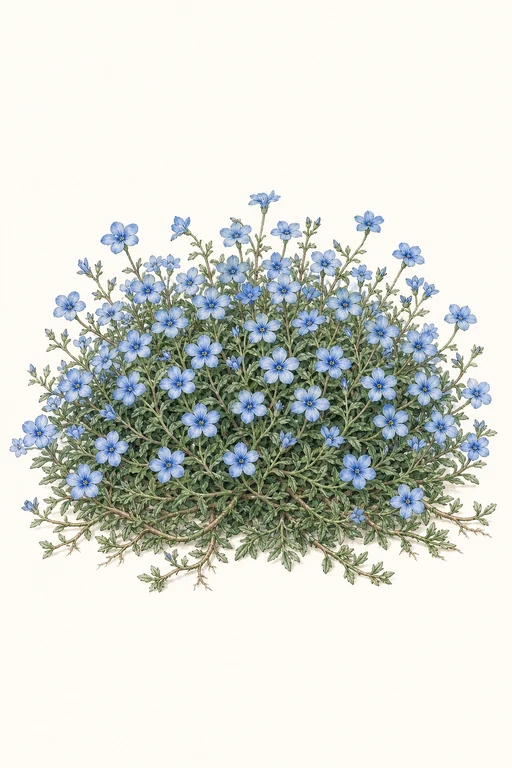
A wash of sky-blue blooms—delicate as spun glass—spangles Blue Daze from late season onward, turning the garden into a living watercolor.
The foliage forms a tidy, low mound of fine, silvery-green leaves, with a soft, airy texture that cushions the color and keeps the planting looking fresh. Ideal for edging, draping over borders, and filling sunny gaps, Blue Daze is a tough, perennial groundcover that rewards with long-lasting, vibrant color.
Light: Full SunMaturity: 90 DaysHabit: Spreading
Planting schedules and alerts are optimized for Columbus (Zone 6b).
Crop Dates
| Milestone | Date |
|---|---|
| Start Indoors | Direct Sow |
| Last Frost | Apr 25th |
| Transplant / Sow Outdoors | Apr 25th |
| Harvest Begins | Jul 24th |
| Harvest Ends | Oct 16th |
Crop Details
| Trait | Value |
|---|---|
| Days to Maturity | 90 |
| Sun Requirements | Full Sun |
| Growth Habit | Spreading |
| Support Needed | None |
| Planting Depth | Normal |
| Germination Temp (°F) | 70 |
| Min Soil Temp (°F) | 65 |
| Min Night Temp (°F) | 50 |
| Harden Off (days) | 7 |
Culinary Notes

Chef's Note
Blue Daze reads more like a whisper than a flavor punch—use it like a delicate edible flower garnish, right at the end, so the petals stay airy and don’t collapse into the dish. Its sky-blue sweetness plays best with bright citrus and creamy bases where its light crunch can still be felt.

Best Uses
- sparingly used as a garnish over chilled drinks and desserts
- folded in at the last moment into buttered rice or warm grains for a brief floral lift
- topped over yogurt, fresh fruit, or panna cotta to keep the petals intact

Flavor Profile

Kitchen Pairings
Frequently Asked Questions
What pest or disease commonly affects Evolvulus glomeratus (blue daze), and how can I treat it?
How often should I water Evolvulus glomeratus during its main growing phase?
How do I know when Evolvulus glomeratus is ready to harvest?
Sowing Tips

Transplant Conditions
Wait until soil reaches 65°F and nights stay above 50°F before moving outdoors. Harden off for 7 days first.
Expert Note

For best establishment in USDA zones, transplant Blue Daze only after consistently warm conditions, then water lightly until it roots and follow with minimal irrigation to prevent stem rot.