
Blueberry
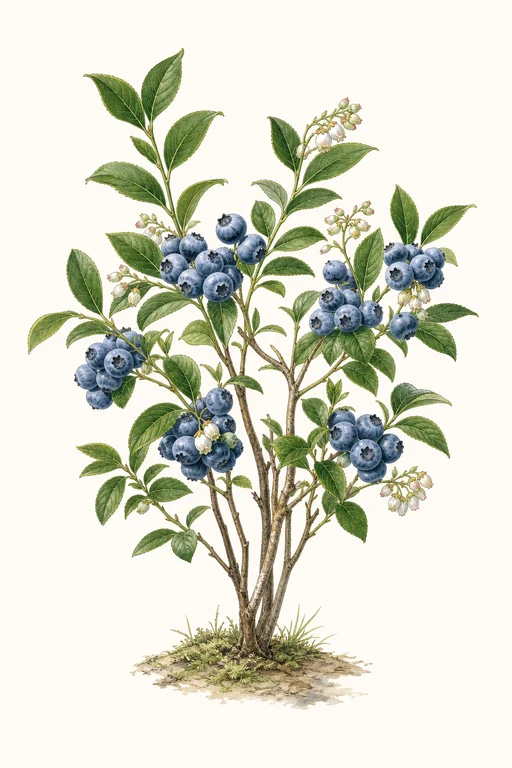
Bursting with a cool, dawn-blue bloom, Blueberry (Highbush) delivers sweet-tart berries that feel like velvet between the fingers—firm-skinned yet juicy, with a bright, aromatic finish.
Ideal for fresh picking straight from the shrub, these berries shine in sauces and preserves, and their vivid color makes every jar and bowl look freshly painted. Grow Blueberry for a quick, rewarding 30-day journey to abundant, garden-worthy fruit.
Light: Full SunMaturity: 30 DaysHabit: Shrub
Location not set yet
Location not set yet
Enter your ZIP for local crop dates
Blueberry Planting Dates by USDA Zone
Estimated US hardiness-zone windows for sow, transplant, and harvest. Enter a US ZIP above for exact local dates, or open a zone below.
| Zone | Start Indoors | Sow / Transplant | Harvest |
|---|---|---|---|
| Zone 1a | Direct Sow | Jun 15th | Jul 15th – Jul 15th |
| Zone 1b | Direct Sow | Jun 1st | Jul 1st – Aug 1st |
| Zone 2a | Direct Sow | May 25th | Jun 24th – Aug 29th |
| Zone 2b | Direct Sow | May 15th | Jun 14th – Aug 25th |
| Zone 3a | Direct Sow | May 15th | Jun 14th – Sep 1st |
| Zone 3b | Direct Sow | May 19th | Jun 18th – Sep 21st |
| Zone 4a | Direct Sow | May 15th | Jun 14th – Sep 24th |
| Zone 4b | Direct Sow | May 13th | Jun 12th – Sep 27th |
| Zone 5a | Direct Sow | May 8th | Jun 7th – Sep 30th |
| Zone 5b | Direct Sow | May 4th | Jun 3rd – Oct 5th |
| Zone 6a | Direct Sow | May 1st | May 31st – Oct 10th |
| Zone 6b | Direct Sow | Apr 25th | May 25th – Oct 16th |
| Zone 7a | Direct Sow | Apr 20th | May 20th – Oct 20th |
| Zone 7b | Direct Sow | Apr 10th | May 10th – Oct 28th |
| Zone 8a | Direct Sow | Apr 1st | May 1st – Nov 5th |
| Zone 8b | Direct Sow | Mar 23rd | Apr 22nd – Nov 12th |
| Zone 9a | Direct Sow | Mar 6th | Apr 5th – Nov 26th |
| Zone 9b | Direct Sow | Feb 9th | Mar 11th – Dec 9th |
| Zone 10a | — | Oct 1st | Oct 31st – Feb 28th |
| Zone 10b | — | Oct 1st | Oct 31st – Feb 28th |
| Zone 11a | — | Oct 1st | Oct 31st – Feb 28th |
| Zone 11b | — | Oct 1st | Oct 31st – Feb 28th |
| Zone 12a | — | Oct 1st | Oct 31st – Feb 28th |
| Zone 12b | — | Oct 1st | Oct 31st – Feb 28th |
| Zone 13a | — | Oct 1st | Oct 31st – Feb 28th |
| Zone 13b | — | Oct 1st | Oct 31st – Feb 28th |
Crop Details
| Trait | Value |
|---|---|
| Days to Maturity | 30 |
| Sun Requirements | Full Sun |
| Growth Habit | Shrub |
| Support Needed | None |
| Planting Depth | Normal |
| Germination Temp (°F) | 70 |
| Min Soil Temp (°F) | 45 |
| Min Night Temp (°F) | 28 |
| Harden Off (days) | Not Required |
Culinary Notes

Chef's Note
These highbush blueberries bring a clean, mouthwatering tartness with berries that hold their shape in heat—ideal for compote and crumble where you want bursts of fruit rather than jammy mush. Their sweetness plays best against citrus and dairy fats, which round the edges and make the flavor read deeper on the palate.

Best Uses
- quick skillet compote that stays slightly chunky
- baking into muffins or a crumble where the skins won’t collapse
- fresh eating with yogurt or kefir for a tart-sweet contrast
- staining a sauce reduction for pancakes or roast meats

Flavor Profile

Kitchen Pairings
Frequently Asked Questions
What pest or disease commonly affects Vaccinium corymbosum (blueberry), and what’s the best prevention?
How often should I water blueberry during the main growing phase, and how do I know the soil moisture is right?
How can I tell when my blueberries (Vaccinium corymbosum) are ready to harvest?
What soil preparation and fertility program works best for Vaccinium corymbosum at home?
Should I space plants a certain way, and do I need transplanting or direct sowing?
What’s a frequent beginner mistake with blueberry, and how can I avoid it?
Sowing Tips

Transplant Conditions
Wait until soil reaches 45°F and nights stay above 28°F before moving outdoors.
Expert Note

Plant highbush blueberry with acidic soil (pH ~4.5–5.5), consistent moisture, and ensure cross-pollination by growing compatible varieties where possible.