
Brora
Sink your spoon into Brora rutabaga’s sweet, mellow depth—its flesh is buttery-tender with a fine, even grain and a clean, comforting finish.
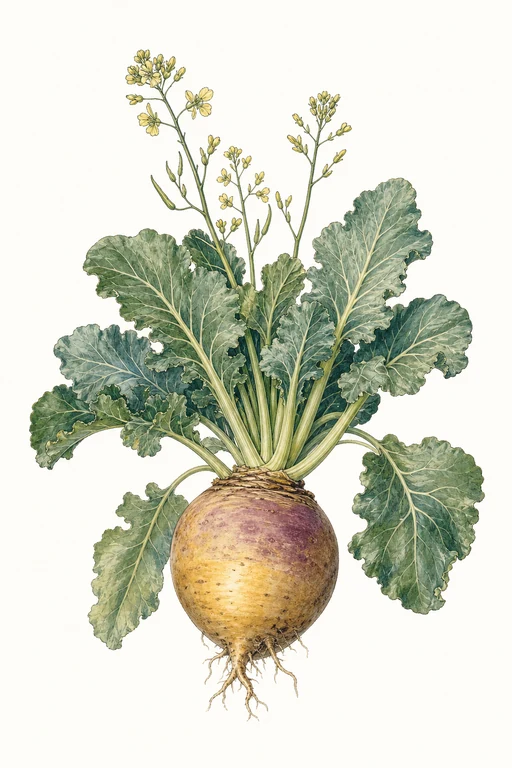
At maturity, the roots form a handsome, rounded-to-oval silhouette with a warm golden interior and a softly blushed shoulder that promises uniform performance in the garden. Brora shines for roasting and mashing, and it also lends itself beautifully to hearty soups, gratins, and tangy pickled preparations.
Light: Full SunMaturity: 90 DaysHabit: Taproot
Planting schedules and alerts are optimized for Columbus (Zone 6b).
Crop Dates
| Milestone | Date |
|---|---|
| Start Indoors | Direct Sow |
| Last Frost | Apr 25th |
| Transplant / Sow Outdoors | Apr 25th |
| Harvest Begins | Jul 24th |
| Harvest Ends | Oct 16th |
Crop Details
| Trait | Value |
|---|---|
| Days to Maturity | 90 |
| Sun Requirements | Full Sun |
| Growth Habit | Taproot |
| Support Needed | None |
| Planting Depth | Normal |
| Germination Temp (°F) | 45 |
| Min Soil Temp (°F) | 45 |
| Min Night Temp (°F) | 30 |
| Harden Off (days) | Not Required |
Culinary Notes

Chef's Note
Brora rutabaga cooks up buttery and uniform—less fibrous grit, more spoonable silk—so it thrives where you want a thick, cozy texture. Roast or mash it and let the mild peppery lift stand up to tangy mustard and cider vinegar without losing its sweet backbone.

Best Uses
- roasting and browning, then mashing into a smooth, spoon-coating puree
- hearty soups where it melts into velvety body
- gratin slices that crisp at the edges without turning grainy
- tangy pickles for a sweet-acid crunch

Flavor Profile

Frequently Asked Questions
Brora (90-day) — how do I handle powdery mildew if it shows up on the leaves?
How often should I water Brora during the main growing phase to avoid stress?
How can I tell when Brora is ready to harvest?
Sowing Tips

Transplant Conditions
Wait until soil reaches 45°F and nights stay above 30°F before moving outdoors.
Expert Note

For the sweetest flavor, grow rutabaga in cool weather and aim for steady soil moisture while avoiding long stretches of heat.