
Red Giant Mustard
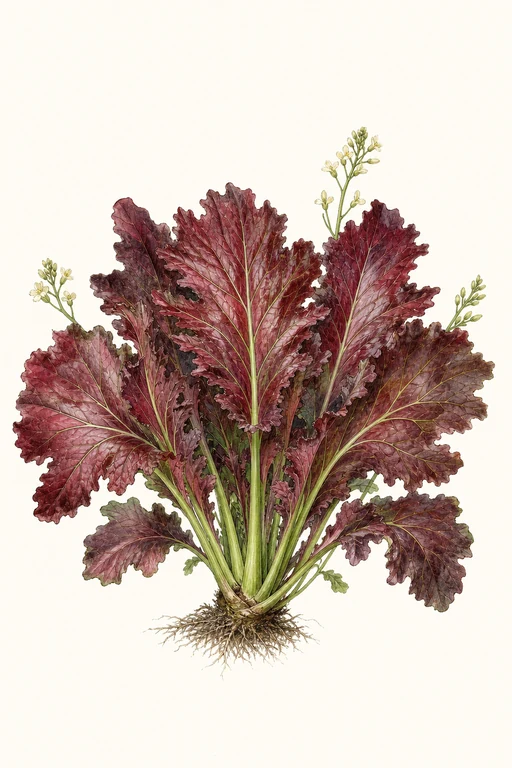
Crisp, peppery leaves unfurl with a bold, ruby-red cast—like a living bouquet of spice—while the texture stays tender enough to savor at first bite.
Red Giant Mustard forms broad, vigorous foliage in just about 30 days, offering a satisfying crunch with a bright mustard bite that mellows beautifully when temperatures soften. Grow it for fresh salads and vibrant garnishes, or for quick wilted greens and savory sauces that turn its color into a dramatic, garden-to-table statement.
Light: Full SunMaturity: 30 DaysHabit: Rosette
Crop Dates : 9b
| Milestone | Date |
|---|---|
| Start Indoors | Direct Sow |
| Last Frost | Feb 9th |
| Transplant / Sow Outdoors | Feb 2nd |
| Harvest Begins | Mar 4th |
| Harvest Ends | Dec 9th |
Crop Details
| Trait | Value |
|---|---|
| Days to Maturity | 30 |
| Sun Requirements | Full Sun |
| Growth Habit | Rosette |
| Support Needed | None |
| Planting Depth | Normal |
| Germination Temp (°F) | 70 |
| Min Soil Temp (°F) | 40 |
| Min Night Temp (°F) | 32 |
| Harden Off (days) | 6 |
Culinary Notes

Chef's Note
Red Giant Mustard is built for contrast: its crisp, tender leaves carry a real peppery bite that tames fast—so it works raw for punchy crunch or quick-wilted to become glossy and mellow. Keep it vinaigrette-forward (acid + fat) and let it shine without getting buried by sweet or starchy flavors.

Best Uses
- shaved or torn into raw salads where the leaves keep their snap
- blister-quick wilted greens in a hot skillet for a gentler mustard heat
- stir-through mustardy pesto or herb sauce for sandwiches and bowls
- tossed into warm grain salads while still lightly crisp at the edges

Flavor Profile

Kitchen Pairings
Frequently Asked Questions
What’s a common pest or disease problem for red giant mustard (Brassica juncea), and how do I control it?
How often should I water red giant mustard (Brassica juncea) during the main growing phase?
How can I tell when red giant mustard (Brassica juncea) is ready to harvest?
Sowing Tips

Transplant Conditions
Wait until soil reaches 40°F and nights stay above 32°F before moving outdoors. Harden off for 6 days first.
Expert Note

For best wasabi-like flavor, grow in cool weather and avoid hot spells—shade cloth can help if afternoons get too warm.