
Calabash Gourd
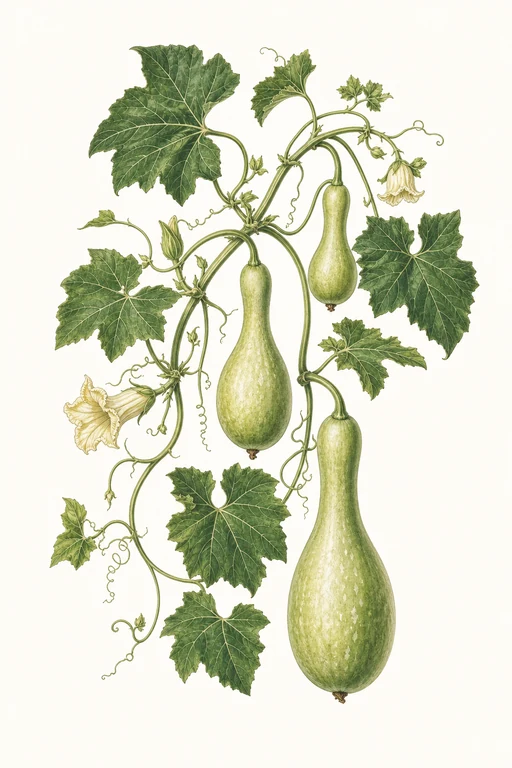
Sink your senses into the Calabash Gourd’s graceful, fast-growing vines and the promise of its long, bottle-shaped fruit—cool, pale green skin that deepens as it matures.
The flesh is crisp and mild, with a tender, watery snap that shines in fresh preparations and lends itself beautifully to simmered dishes, stir-fries, and pickling for a bright, clean bite. Grow it for its abundant productivity and the satisfying arc from flowering vine to stately, harvest-ready bottles at about 85 days.
Light: Full SunMaturity: 85 DaysHabit: Vine
Planting schedules and alerts are optimized for Columbus (Zone 6b).
Crop Dates
| Milestone | Date |
|---|---|
| Start Indoors | Apr 18th |
| Last Frost | Apr 25th |
| Transplant / Sow Outdoors | May 2nd |
| Harvest Begins | Jul 26th |
| Harvest Ends | Oct 16th |
Crop Details
| Trait | Value |
|---|---|
| Days to Maturity | 85 |
| Sun Requirements | Full Sun |
| Growth Habit | Vine |
| Support Needed | Trellis |
| Planting Depth | Normal |
| Germination Temp (°F) | 75 |
| Min Soil Temp (°F) | 65 |
| Min Night Temp (°F) | 55 |
| Harden Off (days) | 10 |
Culinary Notes

Chef's Note
Calabash/Bottle gourd is all about that crisp, watery crunch—use it fast in heat so it doesn’t collapse, or pickle it for the kind of snap that cuts through rich sauces. Its flavor stays mild, so it rewards aggressive seasoning (garlic, ginger, lime, chili) rather than long, slow cooking.

Best Uses
- quick stir-fry or sautée where it keeps a snappy bite
- light simmering in broths for a clean, refreshing body
- quick pickles for a bright, crunchy tang
- fresh julienne salad with salt and citrus to wake it up

Flavor Profile

Frequently Asked Questions
What disease commonly affects Lagenaria siceraria, and how can I prevent it?
How often should I water Lagenaria siceraria during the main growing phase?
How can I tell when Lagenaria siceraria is ready to harvest?
Sowing Tips

Transplant Conditions
Wait until soil reaches 65°F and nights stay above 55°F before moving outdoors. Harden off for 10 days first.

Direct Sow Preferred
Sensitive roots — does not transplant well. If starting indoors, use biodegradable pots and disturb roots as little as possible when moving outdoors.
Expert Note

Warm up the soil fully (and consider black plastic) before transplanting gourd seedlings to avoid cold-stress and early vine stalling.