
Calabash
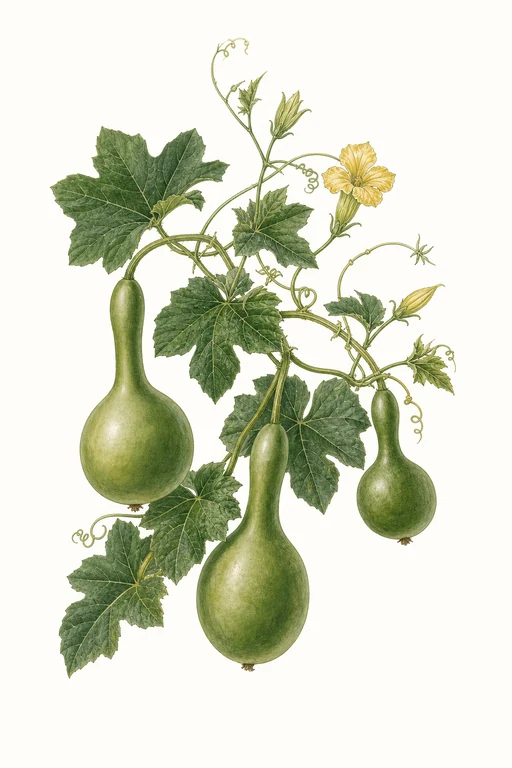
A long, elegant bottle gourd with a tender, pale interior and a subtly sweet, fresh flavor that feels like summer on the tongue.
Calabash forms smooth, elongated fruits with a refined silhouette and a crisp, juicy texture at maturity—ideal for roasting to bring out gentle caramel notes, simmering into silky sauces, or pickling for bright, tangy bite. Grow it for its showpiece harvest: vigorous vines that reward patience with gourds as beautiful as they are versatile.
Light: Full SunMaturity: 90 DaysHabit: Vine
Planting schedules and alerts are optimized for Columbus (Zone 6b).
Crop Dates
| Milestone | Date |
|---|---|
| Start Indoors | Apr 11th |
| Last Frost | Apr 25th |
| Transplant / Sow Outdoors | May 9th |
| Harvest Begins | Aug 7th |
| Harvest Ends | Oct 16th |
Crop Details
| Trait | Value |
|---|---|
| Days to Maturity | 90 |
| Sun Requirements | Full Sun |
| Growth Habit | Vine |
| Support Needed | Trellis |
| Planting Depth | Normal |
| Germination Temp (°F) | 70 |
| Min Soil Temp (°F) | 65 |
| Min Night Temp (°F) | 55 |
| Harden Off (days) | 10 |
Culinary Notes

Chef's Note
Calabash’s pale interior stays juicy and then turns silky without collapsing into mush, so it eats clean—like a vegetable that’s both refreshing and cooperative. Mildly sweet, it’s a dream for aromatics: roast for browned sweetness or simmer/pickle to turn its neutrality into something vivid.

Best Uses
- quick stir-fry with garlic and ginger (keep it crisp by not overcooking)
- roast until browned at the edges for gentle caramel notes
- simmer into a silky soup or curry where it acts like edible sponge
- quick pickle for a tangy crunch that cuts through rich dishes

Flavor Profile

Kitchen Pairings
Frequently Asked Questions
What pest or disease most commonly affects Lagenaria siceraria (calabash), and how can I control it?
How often should I water calabash during the main growing phase (after vines start running)?
How do I know when Lagenaria siceraria (calabash) is ready to harvest?
Sowing Tips

Transplant Conditions
Wait until soil reaches 65°F and nights stay above 55°F before moving outdoors. Harden off for 10 days first.

Direct Sow Preferred
Sensitive roots — does not transplant well. If starting indoors, use biodegradable pots and disturb roots as little as possible when moving outdoors.
Expert Note

Warm soil matters—wait until nights are reliably warm and the soil is well above 65°F before transplanting to prevent slow, stunted vines.