
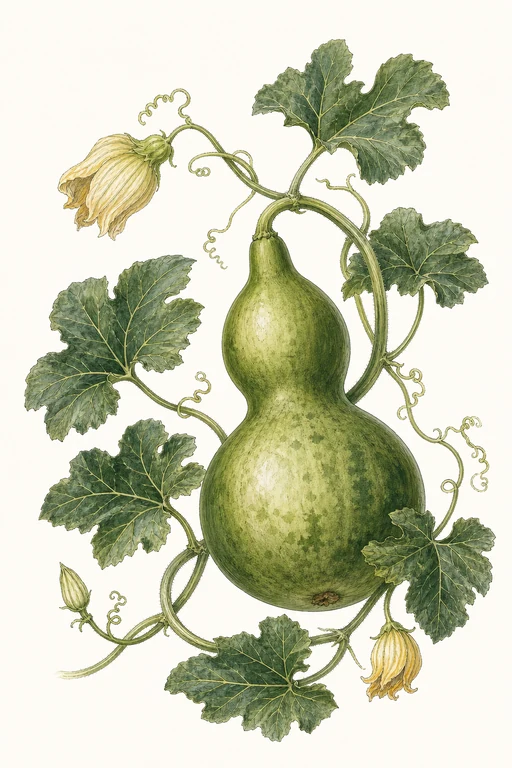
Canteen Gourd
Sink your senses into Canteen Gourd’s mellow, sun-warmed flesh and its gently sweet, aromatic character that lingers with a clean, garden-fresh finish.
At maturity, the fruit develops a sturdy, satisfying texture—ideal for hearty preparations where its substance shines. Grow Canteen Gourd for a bold, dependable harvest that brings both visual abundance and richly flavored versatility to the table.
Light: Full SunMaturity: 110 DaysHabit: Vine
Planting schedules and alerts are optimized for Columbus (Zone 6b).
Crop Dates
| Milestone | Date |
|---|---|
| Start Indoors | Apr 25th |
| Last Frost | Apr 25th |
| Transplant / Sow Outdoors | May 9th |
| Harvest Begins | Aug 27th |
| Harvest Ends | Oct 16th |
Crop Details
| Trait | Value |
|---|---|
| Days to Maturity | 110 |
| Sun Requirements | Full Sun |
| Growth Habit | Vine |
| Support Needed | Trellis |
| Planting Depth | Normal |
| Germination Temp (°F) | 70 |
| Min Soil Temp (°F) | 70 |
| Min Night Temp (°F) | 55 |
| Harden Off (days) | 12 |
Culinary Notes

Chef's Note
Canteen Gourd cooks up with dependable firmness—roast it hard for browned edges, then let it collapse into a spoonable center without turning stringy. Its mild sweetness and aromatic lift make it a natural for sage-brown-butter treatment and warming spice rubs, especially when you want a hearty, textured bite.

Best Uses
- roasting into caramelized wedges that hold their shape
- pan-roasting or sheet-pan caramelization for browned edges and creamy centers
- slow-braised pieces in spiced broths or stews
- thickening purées for velvety soups or mash

Flavor Profile

Frequently Asked Questions
What pests or diseases commonly affect Lagenaria siceraria (canteen gourd), and what should I do if I see them?
How often should I water Lagenaria siceraria during the main growing phase to support healthy vines and gourds?
How can I tell when my canteen gourd (Lagenaria siceraria) is ready to harvest?
Sowing Tips

Transplant Conditions
Wait until soil reaches 70°F and nights stay above 55°F before moving outdoors. Harden off for 12 days first.

Direct Sow Preferred
Sensitive roots — does not transplant well. If starting indoors, use biodegradable pots and disturb roots as little as possible when moving outdoors.
Expert Note

For fastest, most uniform growth, keep seeds warm (and soak them overnight) until soil is reliably warm, then transplant only after nighttime stays consistently mild.