
Canteen
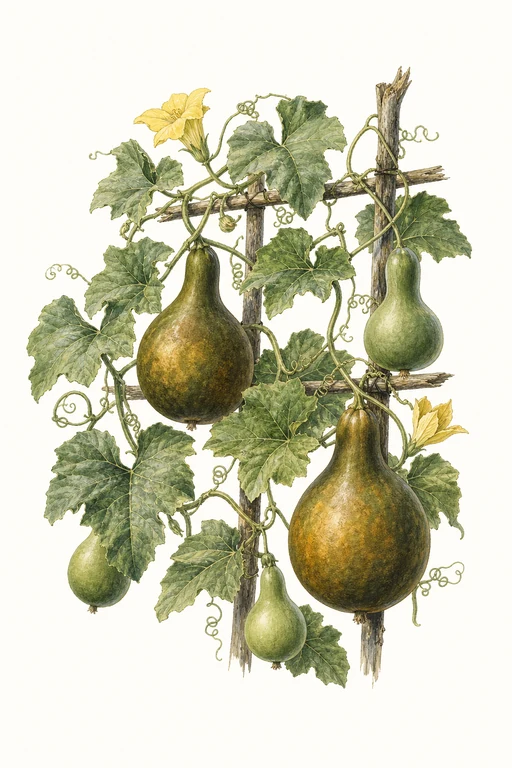
Canteen gourd brings a bold, satisfying presence to the garden—its ripe skin develops a rich, dependable color and a firm, dry finish that feels made for handling and display.
The flesh offers a pleasantly mild, clean flavor with a smooth, substantial texture that holds its character through preparation and preserves beautifully for later use. Grow Canteen for dependable, long-season performance and a harvest that’s as versatile in the home as it is striking on the vine.
Light: Full SunMaturity: 120 DaysHabit: Vine
Planting schedules and alerts are optimized for Columbus (Zone 6b).
Crop Dates
| Milestone | Date |
|---|---|
| Start Indoors | Apr 11th |
| Last Frost | Apr 25th |
| Transplant / Sow Outdoors | Apr 25th |
| Harvest Begins | Aug 23rd |
| Harvest Ends | Oct 16th |
Crop Details
| Trait | Value |
|---|---|
| Days to Maturity | 120 |
| Sun Requirements | Full Sun |
| Growth Habit | Vine |
| Support Needed | Trellis |
| Planting Depth | Normal |
| Germination Temp (°F) | 70 |
| Min Soil Temp (°F) | 65 |
| Min Night Temp (°F) | 55 |
| Harden Off (days) | 10 |
Culinary Notes

Chef's Note
With its firm, smooth flesh and ability to hold texture, this gourd is a workhorse—less watery than many cucurbits, so it stays sculpted in a braise or curry. It also shines when preserved, keeping that satisfying bite instead of collapsing into softness.

Best Uses
- cubed flesh in braises and curries where it shouldn’t turn mushy
- pan-roasting or grilling slices for a bronzed, chewy exterior
- quick pickling for a crisp, preserved bite
- savory soups where it holds shape and thickens slightly

Flavor Profile

Kitchen Pairings
Frequently Asked Questions
Lagenaria siceraria (bottle gourd) — what should I do if I see powdery mildew on the leaves?
How often should I water Lagenaria siceraria during the main growing phase (after flowering)?
How can I tell when Lagenaria siceraria is ready to harvest for long-keeping gourds?
Sowing Tips

Transplant Conditions
Wait until soil reaches 65°F and nights stay above 55°F before moving outdoors. Harden off for 10 days first.

Direct Sow Preferred
Sensitive roots — does not transplant well. If starting indoors, use biodegradable pots and disturb roots as little as possible when moving outdoors.
Expert Note

Start seeds when nights are reliably warm; for gourds grown for hard shells, give ample space and avoid stressing vines during fruit sizing.