
Carmen F1
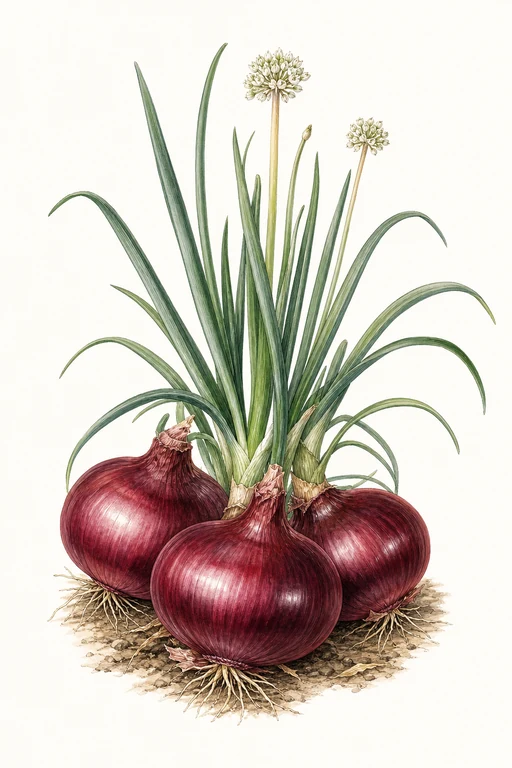
Carmen F1 brings a richly colored, deep mahogany-red bulb with a satin-smooth skin that glows under the garden sun.
Expect a crisp, juicy bite and a balanced, gently pungent allium flavor that holds beautifully in storage—ideal for homegrown red storage onions you can rely on through the season. Grow Carmen F1 for dependable, uniform bulbs and a striking color that elevates every pantry staple.
Light: Full SunMaturity: 105 DaysHabit: Bulbing
Crop Dates : 13b
| Milestone | Date |
|---|---|
| Start Indoors | — |
| Climate | Frost-Free Climate |
| Transplant / Sow Outdoors | Oct 1st |
| Harvest Begins | Jan 14th |
| Harvest Ends | Feb 28th |
Crop Details
| Trait | Value |
|---|---|
| Days to Maturity | 105 |
| Sun Requirements | Full Sun |
| Growth Habit | Bulbing |
| Support Needed | None |
| Planting Depth | Normal |
| Germination Temp (°F) | 70 |
| Min Soil Temp (°F) | 50 |
| Min Night Temp (°F) | 40 |
| Harden Off (days) | 7 |
Culinary Notes

Chef's Note
Carmen F1 is built for the long game: crisp and juicy raw, then turns silky and sweet when you give it time. The deep red bulb color and steady pungency make it especially good for caramelized or braised onions that look as good as they taste.

Best Uses
- thin slicing for sharp, crunchy raw salads and bagel/cold cuts where it won’t go watery fast
- caramelizing—deep color stays attractive while the bite sweetens cleanly
- slow-cooked base for braises and soups where it melts into a glossy, balanced foundation
- storage-ready roasting quarters for jammy edges and a sweet finish

Flavor Profile

Frequently Asked Questions
What common problem affects Allium cepa (onion) and what should I do for it?
How often should I water Allium cepa during the main growing phase?
How can I tell when Allium cepa is ready to harvest?
Sowing Tips

Transplant Conditions
Wait until soil reaches 50°F and nights stay above 40°F before moving outdoors. Harden off for 7 days first.
Expert Note

For sweet, well-sized bulbs, keep seedlings evenly moist and avoid nitrogen-heavy feeding once bulb formation begins.