
Carolina Reaper
A slow-building blaze with a dramatic first hit of bright peppery heat, followed by a lingering, smoky-sweet intensity—Carolina Reaper delivers the kind of superhot thrill that lingers on the senses.
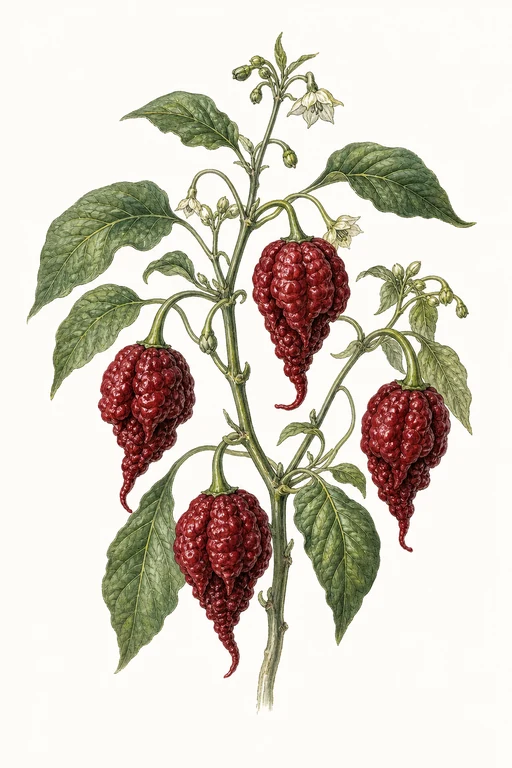
At maturity, the pods form long, knobby spears with a deep, wrinkled surface and a glossy, dark red sheen, offering a crisp snap and unmistakable pungency. Ideal for bold flavor infusions, fiery sauces, and intense pickling-style preparations where you want heat to lead and flavor to follow.
Light: Full SunMaturity: 150 DaysHabit: Upright
Crop Dates : 2a
| Milestone | Date |
|---|---|
| Last Frost | May 25th |
| Growing Approach | Protected Environment Only |
Crop Details
| Trait | Value |
|---|---|
| Days to Maturity | 150 |
| Sun Requirements | Full Sun |
| Growth Habit | Upright |
| Support Needed | Stake |
| Planting Depth | Normal |
| Germination Temp (°F) | 85 |
| Min Soil Temp (°F) | 60 |
| Min Night Temp (°F) | 50 |
| Harden Off (days) | 10 |
Culinary Notes

Chef's Note
Carolina Reaper starts bright and peppery, then ramps into a stubborn, smoky-sweet burn—so it rewards methods where you can tame it (infusions, vinegar reductions, strained sauces) rather than letting it overwhelm everything raw. Use it sparingly, and it’ll behave like concentrated heat with real flavor—clean sharpness on the front, linger on the back.

Best Uses
- smoke-and-reduce hot sauce where heat builds through a vinegar/fruit base
- hot pepper-infused oil or honey (strain well; keep it clean and controlled)
- aggressive pickling-style peppers in vinegar/salt brine for heat-forward tang
- micro-chopped use in small amounts to punch up chili, chowders, and grilled meats

Flavor Profile

Frequently Asked Questions
What pest or disease is most likely to hit Carolina Reaper (Capsicum chinense), and how do I fix it fast?
How often should I water Carolina Reaper during the main growing phase, and what soil moisture level is ideal?
How can I tell when Carolina Reaper is ready to harvest?
Sowing Tips

Transplant Conditions
Wait until soil reaches 60°F and nights stay above 50°F before moving outdoors. Harden off for 10 days first.
Expert Note

For maximum heat and yield, grow in consistently warm soil (60–70°F+) with steady moisture and high calcium (lime/wood ash where appropriate) while avoiding cold snaps after transplanting.