
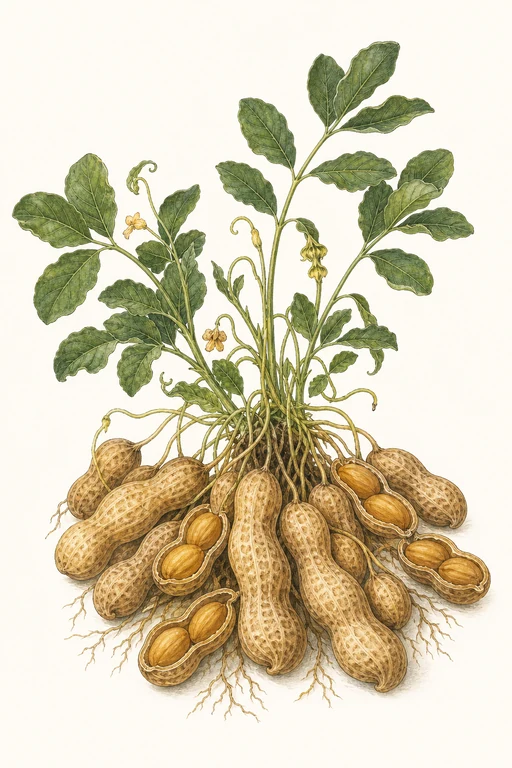
Carwile's Virginia Jumbo
Roast-sweet and richly nutty, Carwile’s Virginia Jumbo Peanut delivers a generous, full-bodied bite with a satisfyingly crisp snap and a buttery, mellow finish.
The large kernels develop a warm, golden character that shines in dry-roasting and makes a standout base for creamy peanut-style spreads and hearty, flavorful sauces. Grow for a long season of steady pod fill—then harvest jumbo size that feels truly special from your own garden.
Light: Full SunMaturity: 130 DaysHabit: Bush
Planting schedules and alerts are optimized for Columbus (Zone 6b).
Crop Dates
| Milestone | Date |
|---|---|
| Start Indoors | Direct Sow |
| Last Frost | Apr 25th |
| Transplant / Sow Outdoors | Jul 4th |
| Harvest Begins | Nov 11th |
| Harvest Ends | Oct 16th |
Crop Details
| Trait | Value |
|---|---|
| Days to Maturity | 130 |
| Sun Requirements | Full Sun |
| Growth Habit | Bush |
| Support Needed | None |
| Planting Depth | Normal |
| Germination Temp (°F) | 80 |
| Min Soil Temp (°F) | 65 |
| Min Night Temp (°F) | 60 |
| Harden Off (days) | Not Required |
Culinary Notes

Chef's Note
These jumbo Virginia kernels roast up with a warm, golden sweetness and a clean snap, so they hold texture instead of collapsing into paste. Use them where you want peanut flavor to stay bold—dry-roast for crunch or blend and reduce into a sauce that coats and clings.

Best Uses
- dry-roasting and salting for a loud, crunchy snack
- making thick peanut-style spreads (stirred or processed smooth-to-grainy)
- peanut sauces for noodles or braises—reduced to cling without tasting raw
- adding jumbo crunch to salads, slaws, or grain bowls

Flavor Profile

Kitchen Pairings
Frequently Asked Questions
What pest or disease most commonly affects peanut (Arachis hypogaea), and how can I control it?
How often should I water peanuts during the main growing phase (after they establish), and what soil moisture level should I aim for?
How do I tell when Carwile’s Virginia Jumbo peanuts (Arachis hypogaea) are ready to harvest?
Sowing Tips

Transplant Conditions
Wait until soil reaches 65°F and nights stay above 60°F before moving outdoors.
Expert Note

Peanuts need warm soil all season—plant when nights are reliably warm and keep soil evenly moist until plants are established, then water less frequently to encourage pod development.