
Cascabella
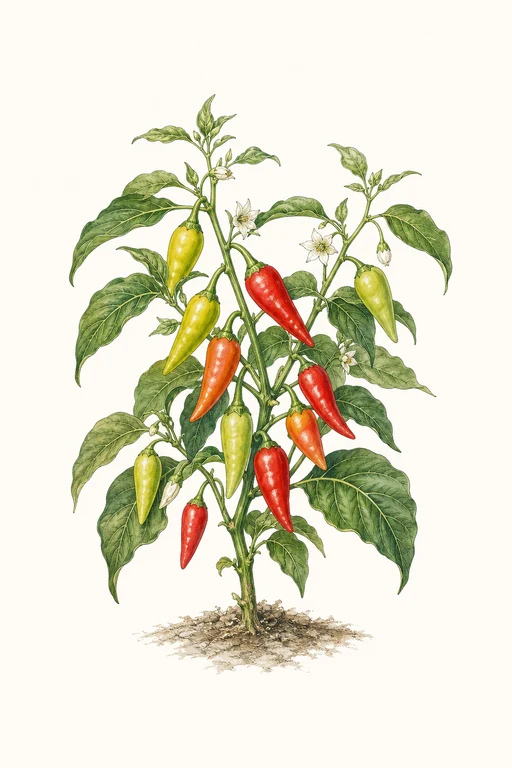
Cascabella peppers arrive with a bright, sunlit snap—crisp, waxy walls and a clean, gently piquant bite that feels vivid from the first taste.
At maturity they develop a glossy, tapered form that’s ideal for pickling and preserves, holding their shape with a satisfying crunch. Grow Cascabella for a dependable, garden-to-jar favorite that turns your harvest into a colorful, tangy centerpiece.
Light: Full SunMaturity: 75 DaysHabit: Bush
Crop Dates : 8a
| Milestone | Date |
|---|---|
| Start Indoors | Feb 11th |
| Last Frost | Apr 1st |
| Transplant / Sow Outdoors | May 13th |
| Harvest Begins | Jul 27th |
| Harvest Ends | Nov 5th |
Crop Details
| Trait | Value |
|---|---|
| Days to Maturity | 75 |
| Sun Requirements | Full Sun |
| Growth Habit | Bush |
| Support Needed | Stake |
| Planting Depth | Normal |
| Germination Temp (°F) | 80 |
| Min Soil Temp (°F) | 60 |
| Min Night Temp (°F) | 50 |
| Harden Off (days) | 10 |
Culinary Notes

Chef's Note
Cascabella’s waxy walls stay snappy after brining, so you get pepper flavor without the mushy collapse you sometimes see with softer hot types. Use them in vinegar and oil treatments where their crisp, gently hot bite can stay front-and-center.

Best Uses
- quick-pickling for crunchy sliced or whole pepper jars
- chopped into oil-based antipasto to keep a firm bite
- roasted briefly and packed into preserves for a sweet-heat accent
- tossed into nacho/quesadilla fillings to stay crisp under heat

Flavor Profile

Frequently Asked Questions
How do I manage blossom-end rot and other fruit issues on Capsicum annuum (Cascabella) if my peppers are turning black or rotting at the end?
During the main growing phase, how often should I water my Cascabella peppers to keep them producing?
When are Cascabella peppers (Capsicum annuum) ready to harvest, and how can I tell?
Sowing Tips

Transplant Conditions
Wait until soil reaches 60°F and nights stay above 50°F before moving outdoors. Harden off for 10 days first.
Expert Note

Start seeds indoors and transplant only after soil warms (about 60°F+) so these thick-walled hot peppers don’t stall from cold ground.