
Catalogna
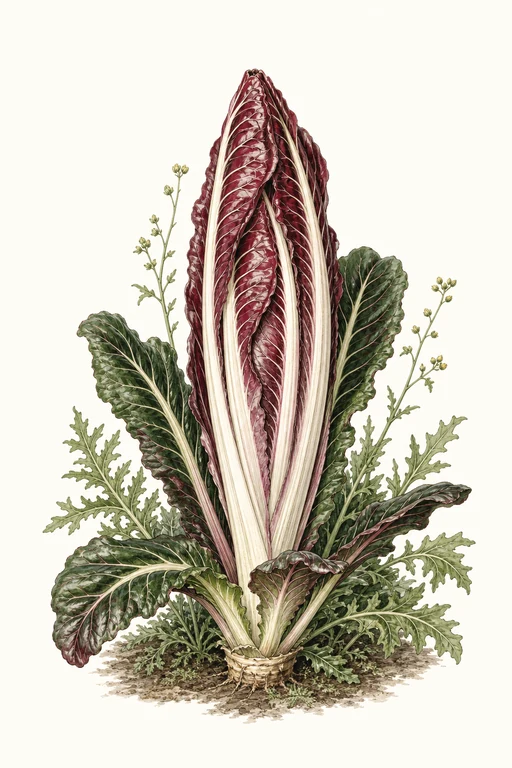
Savory, deeply bitter-sweet flavor blooms as the heads mature into crisp, elongated rosettes with a striking pale-to-rose ribbing.
Catalogna radicchio forms tender, crunchy leaves that hold their snap for fresh salads and quick roasting, and its bold character shines in braises, sautés, and pickling-style preparations. Grow it for a dramatic, garden-to-table centerpiece—cool-weather vigor at about 60 days to maturity delivers a refined bite and a beautiful, garden-fresh crunch.
Light: Full SunMaturity: 60 DaysHabit: Rosette
Planting schedules and alerts are optimized for Columbus (Zone 6b).
Crop Dates
| Milestone | Date |
|---|---|
| Start Indoors | Direct Sow |
| Last Frost | Apr 25th |
| Transplant / Sow Outdoors | Apr 25th |
| Harvest Begins | Jun 24th |
| Harvest Ends | Oct 16th |
Crop Details
| Trait | Value |
|---|---|
| Days to Maturity | 60 |
| Sun Requirements | Full Sun |
| Growth Habit | Rosette |
| Support Needed | None |
| Planting Depth | Normal |
| Germination Temp (°F) | 75 |
| Min Soil Temp (°F) | 45 |
| Min Night Temp (°F) | 28 |
| Harden Off (days) | Not Required |
Culinary Notes

Chef's Note
Catalogna radicchio earns its keep with a clean, aggressive bitter-sweet snap that doesn’t turn watery—so it stands up to hot pans and still behaves in a fresh salad. Pair it with tang and fat (balsamic/olive oil, lemon, cheese) and you’ll get that sharp leaf character without the bite going chalky or harsh.

Best Uses
- quick dry sauté until edges crisp (then deglaze lightly)
- braised radicchio-braising pan for a sweet-bitter velvet
- shaved raw salad with a fatty dressing to tame the bitterness
- roast/char on high heat for caramelized bitterness and sturdy texture
- quick-pickled strips for a sharp, crunchy bite

Flavor Profile

Kitchen Pairings
Frequently Asked Questions
What pest or disease commonly affects Cichorium intybus (Catalogna), and how can I control it?
How often should I water Catalogna during its main growing phase?
How do I know when my Catalogna is ready to harvest?
Sowing Tips

Transplant Conditions
Wait until soil reaches 45°F and nights stay above 28°F before moving outdoors.
Expert Note

Sow for cool weather and keep moisture steady; for Puntarelle-style hollow inner shoots, harvest at a young rosette stage and protect inner growth from light as traditional methods call for.