
Caveman’s Club Gourd
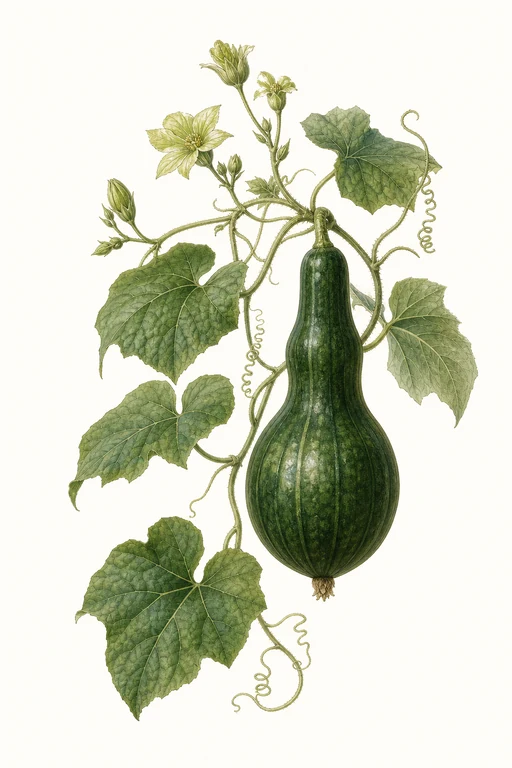
A dramatic, long-necked silhouette with a skin that ripens to a deep, weathered green—Caveman’s Club Gourd brings a bold, earthy aroma and a pleasantly mild, watery sweetness when tender.
The flesh is crisp and clean-textured, ideal for turning into hearty, comforting dishes and also shines in fresh preparations where its refreshing bite can be showcased. Grow it for its striking form and dependable 120-day performance, then enjoy its versatile, kitchen-ready bounty from one impressive vine.
Light: Full SunMaturity: 120 DaysHabit: Vine
Planting schedules and alerts are optimized for Columbus (Zone 6b).
Crop Dates
| Milestone | Date |
|---|---|
| Start Indoors | Direct Sow |
| Last Frost | Apr 25th |
| Transplant / Sow Outdoors | May 23rd |
| Harvest Begins | Sep 20th |
| Harvest Ends | Oct 16th |
Crop Details
| Trait | Value |
|---|---|
| Days to Maturity | 120 |
| Sun Requirements | Full Sun |
| Growth Habit | Vine |
| Support Needed | Trellis |
| Planting Depth | Normal |
| Germination Temp (°F) | 70 |
| Min Soil Temp (°F) | 65 |
| Min Night Temp (°F) | 55 |
| Harden Off (days) | 10 |
Culinary Notes

Chef's Note
Tender Caveman’s Club/Gourd is all about a cool, crisp mouthfeel—brining and high-heat fast cooking keep it from turning watery and soft. When you want something that behaves like a crunchy “veg noodle” but still takes on garlic, ginger, and lime cleanly, this is the squash to grab.

Best Uses
- quick sauté or stir-fry where it stays snappy
- crisp pickles/brines for a refreshing crunch
- tender simmered slices in light broths or coconut curries
- raw-thin ribbons dressed with acid and salt to keep them crisp

Flavor Profile

Frequently Asked Questions
What pest or disease commonly affects Lagenaria siceraria (Cucurbitaceae) and what should I do?
How often should I water Lagenaria siceraria during the main growing phase?
How can I tell when Caveman’s Club gourd (Lagenaria siceraria) is ready to harvest?
Sowing Tips

Transplant Conditions
Wait until soil reaches 65°F and nights stay above 55°F before moving outdoors. Harden off for 10 days first.

Direct Sow Preferred
Sensitive roots — does not transplant well. If starting indoors, use biodegradable pots and disturb roots as little as possible when moving outdoors.
Expert Note

Give bottle gourds plenty of warmth and space; start them only when soil is reliably hot to avoid stunting and misshapen, thick-walled fruit.