
Caveman's Club
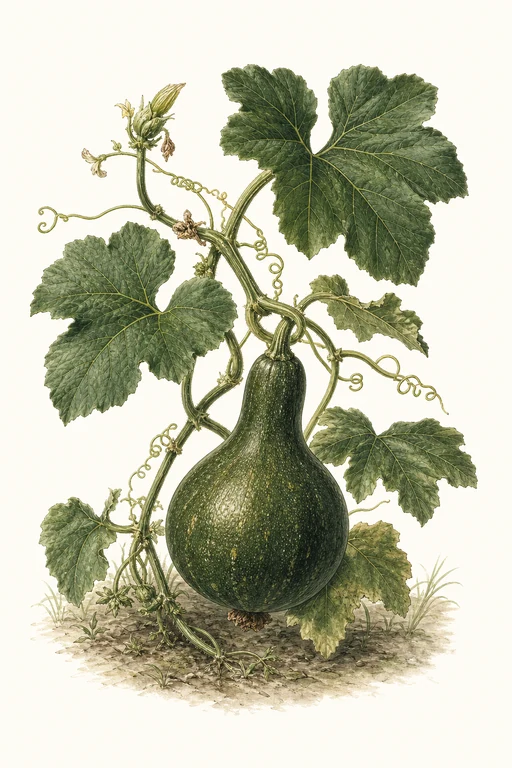
Rich, club-shaped gourds of Caveman's Club bring a rugged, sculptural beauty to the garden—thick-skinned and deeply colored, with a satisfying firmness that invites long-lasting display.
The flesh is dense and pleasantly mild, making these gourds a standout for hearty preparations and bold flavor-building in sauces and preserves, while their sturdy form also shines when roasted for a caramelized, nutty depth. Grow for the dramatic silhouette and the gratifying, substantial bite that turns every harvest into a centerpiece.
Light: Full SunMaturity: 110 DaysHabit: Vine
Planting schedules and alerts are optimized for Columbus (Zone 6b).
Crop Dates
| Milestone | Date |
|---|---|
| Start Indoors | Apr 11th |
| Last Frost | Apr 25th |
| Transplant / Sow Outdoors | Apr 25th |
| Harvest Begins | Aug 13th |
| Harvest Ends | Oct 16th |
Crop Details
| Trait | Value |
|---|---|
| Days to Maturity | 110 |
| Sun Requirements | Full Sun |
| Growth Habit | Vine |
| Support Needed | Trellis |
| Planting Depth | Normal |
| Germination Temp (°F) | 70 |
| Min Soil Temp (°F) | 65 |
| Min Night Temp (°F) | 55 |
| Harden Off (days) | 10 |
Culinary Notes

Chef's Note
Caveman’s Club’s thick, dense flesh stays structured—great for roasting until the outside browns while the interior remains pleasantly firm. Because it’s mildly sweet, it’s a sponge for bold smoke, garlic, and brine, making it ideal for sauces, preserves, and hearty gratins.

Best Uses
- roasted chunks for caramelized edges and a hearty fork-tender bite
- chunky braises and thick, slow sauces where it won’t collapse
- pickles and preserves that benefit from a sturdy, non-mushy texture
- carving into substantial shapes for savory gratins

Flavor Profile

Kitchen Pairings
Frequently Asked Questions
What pest or disease commonly affects Lagenaria siceraria (Caveman's Club), and how do I manage it?
How often should I water Lagenaria siceraria during the main growing phase?
How can I tell when Caveman's Club (Lagenaria siceraria) is ready to harvest?
Sowing Tips

Transplant Conditions
Wait until soil reaches 65°F and nights stay above 55°F before moving outdoors. Harden off for 10 days first.

Direct Sow Preferred
Sensitive roots — does not transplant well. If starting indoors, use biodegradable pots and disturb roots as little as possible when moving outdoors.
Expert Note

Start seeds in biodegradable pots only if you must, but prioritize warm soil and protect from cold nights because club gourds are very frost- and chill-sensitive.