
Champion Collards
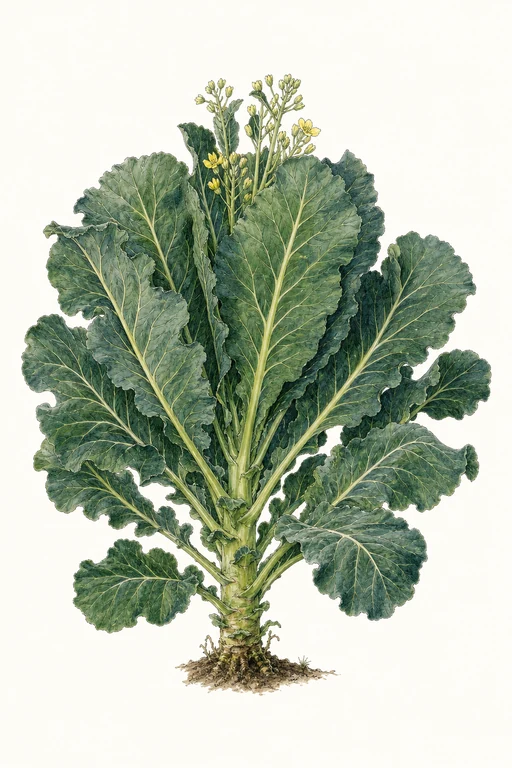
Sink your senses into Champion Collards’ lush, velvety leaves—deep blue-green and richly fragrant, with a tender, sweet bite that holds its charm from first harvest through repeated cuttings.
The foliage forms a sturdy, upright rosette that stays pleasantly crisp, making it ideal for slow-simmered pot favorites, hearty braises, and robust greens-forward sauces. Grow this dependable 60-day performer for a steady supply of premium greens with a satisfying, spoon-tender texture.
Light: Full SunMaturity: 60 DaysHabit: Rosette
Planting schedules and alerts are optimized for Columbus (Zone 6b).
Crop Dates
| Milestone | Date |
|---|---|
| Start Indoors | Direct Sow |
| Last Frost | Apr 25th |
| Transplant / Sow Outdoors | Apr 18th |
| Harvest Begins | Jun 17th |
| Harvest Ends | Oct 16th |
Crop Details
| Trait | Value |
|---|---|
| Days to Maturity | 60 |
| Sun Requirements | Full Sun |
| Growth Habit | Rosette |
| Support Needed | None |
| Planting Depth | Normal |
| Germination Temp (°F) | 45 |
| Min Soil Temp (°F) | 40 |
| Min Night Temp (°F) | 32 |
| Harden Off (days) | 6 |
Culinary Notes

Chef's Note
Champion Collards have that sweet, velvety leaf structure that stays intact through long heat—so you get spoon-tender greens without the bitter collapse. Handle them like a braise: fat to round the brassica edge, then vinegar or citrus at the end to wake the whole pot.

Best Uses
- low-and-slow potlikker simmer (greens go spoon-tender without turning to mulch)
- braised greens with rendered fat and a splash of vinegar to sharpen the bite
- thick greens-forward purée/sauce for tossing with pasta or spooning over roast grains
- quick sauté finish on already-tender leaves to keep a little snap

Flavor Profile

Kitchen Pairings
Frequently Asked Questions
What pest or disease commonly affects collards (Brassica oleracea) and how can I control it?
How often should I water champion collards during the main growing phase?
How do I know when Champion collards (Brassica oleracea) are ready to harvest?
Sowing Tips

Transplant Conditions
Wait until soil reaches 40°F and nights stay above 32°F before moving outdoors. Harden off for 6 days first.
Expert Note

Start indoors for an earlier crop, but transplant only when nights are reliably above cold-tolerant minimums and keep plants well-watered for fast root establishment.