
Chard 'Golden Giant'
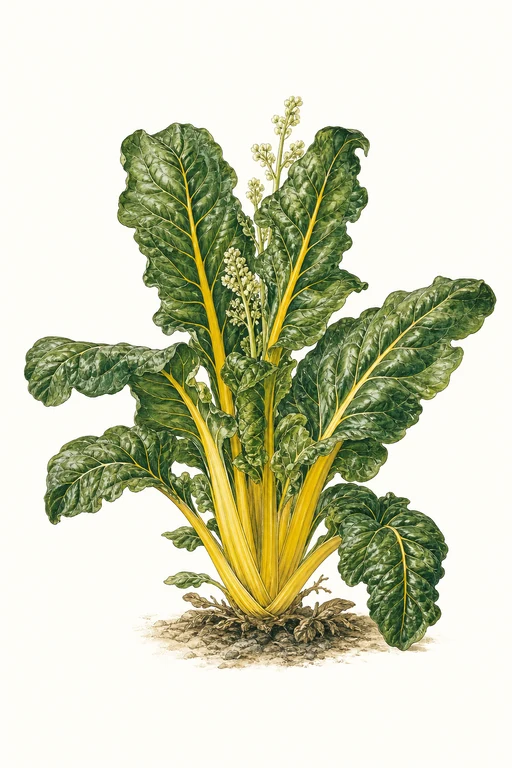
Sunlit stems are the first delight of Chard ‘Golden Giant’—a bold, warm golden-yellow that glows against lush, deep-green leaves.
At maturity, the leaves are broad and tender with a gently crisp bite, offering a vivid, mellow flavor that shines in fresh bunches and becomes especially captivating when roasted or folded into vibrant sauces. Grow it for a long, generous harvest window—one plant that looks as magnificent as it tastes.
Light: Full SunMaturity: 55 DaysHabit: Rosette
Location not set yet
Location not set yet
Enter your ZIP for local crop dates
Chard 'Golden Giant' Planting Dates by USDA Zone
Estimated US hardiness-zone windows for sow, transplant, and harvest. Enter a US ZIP above for exact local dates, or open a zone below.
| Zone | Start Indoors | Sow / Transplant | Harvest |
|---|---|---|---|
| Zone 1a | Protected Environment Only | ||
| Zone 1b | Direct Sow | Jun 1st | Jul 26th – Aug 1st |
| Zone 2a | Direct Sow | May 25th | Jul 19th – Aug 29th |
| Zone 2b | Direct Sow | May 15th | Jul 9th – Aug 25th |
| Zone 3a | Direct Sow | May 15th | Jul 9th – Sep 1st |
| Zone 3b | Direct Sow | May 19th | Jul 13th – Sep 21st |
| Zone 4a | Direct Sow | May 15th | Jul 9th – Sep 24th |
| Zone 4b | Direct Sow | May 13th | Jul 7th – Sep 27th |
| Zone 5a | Direct Sow | May 8th | Jul 2nd – Sep 30th |
| Zone 5b | Direct Sow | May 4th | Jun 28th – Oct 5th |
| Zone 6a | Direct Sow | May 1st | Jun 25th – Oct 10th |
| Zone 6b | Direct Sow | Apr 25th | Jun 19th – Oct 16th |
| Zone 7a | Direct Sow | Apr 20th | Jun 14th – Oct 20th |
| Zone 7b | Direct Sow | Apr 10th | Jun 4th – Oct 28th |
| Zone 8a | Direct Sow | Apr 1st | May 26th – Nov 5th |
| Zone 8b | Direct Sow | Mar 23rd | May 17th – Nov 12th |
| Zone 9a | Direct Sow | Mar 6th | Apr 30th – Nov 26th |
| Zone 9b | Direct Sow | Feb 9th | Apr 5th – Dec 9th |
| Zone 10a | — | Oct 1st | Nov 25th – Feb 28th |
| Zone 10b | — | Oct 1st | Nov 25th – Feb 28th |
| Zone 11a | — | Oct 1st | Nov 25th – Feb 28th |
| Zone 11b | — | Oct 1st | Nov 25th – Feb 28th |
| Zone 12a | — | Oct 1st | Nov 25th – Feb 28th |
| Zone 12b | — | Oct 1st | Nov 25th – Feb 28th |
| Zone 13a | — | Oct 1st | Nov 25th – Feb 28th |
| Zone 13b | — | Oct 1st | Nov 25th – Feb 28th |
Crop Details
| Trait | Value |
|---|---|
| Days to Maturity | 55 |
| Sun Requirements | Full Sun |
| Growth Habit | Rosette |
| Support Needed | None |
| Planting Depth | Normal |
| Germination Temp (°F) | 70 |
| Min Soil Temp (°F) | 40 |
| Min Night Temp (°F) | 28 |
| Harden Off (days) | 5 |
Culinary Notes

Chef's Note
‘Golden Giant’ chard gives you a warm, sunshiney stem and broad, tender leaves that stay pleasantly snappy—perfect when you want greens that don’t collapse instantly. Roast or fold into a tangy, creamy sauce and you’ll get that crisp-to-silky contrast the best chard is built for.

Best Uses
- quick sauté with butter to keep the leaves glossy and not rubbery
- roast stems until golden and caramel-edged, then toss with the leaves for wilted volume
- fold into lemony yogurt or tahini sauces for a creamy, tang-bright coating
- sturdy braises or sheet-pan bakes where it holds shape

Flavor Profile

Kitchen Pairings
Frequently Asked Questions
What’s a common chard (Beta vulgaris var. cicla) pest or disease problem, and how do I fix it?
How often should I water Swiss chard during the main growing phase?
How can I tell when Swiss chard ‘Golden Giant’ is ready to harvest?
Sowing Tips

Transplant Conditions
Wait until soil reaches 40°F and nights stay above 28°F before moving outdoors. Harden off for 5 days first.
Expert Note

Start outdoors for best leaf quality, since chard thrives with consistent moisture and doesn’t need long indoor lead time.