
Chard 'Golden'
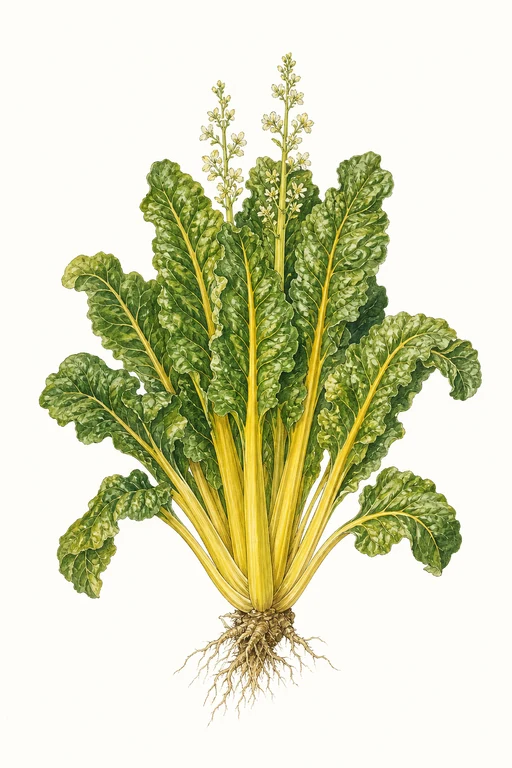
Sunlit and tender, Chard ‘Golden’ delivers a luminous harvest with buttery-gold stems and broad, gently crinkled leaves that feel silky-smooth to the touch.
The flavor is pleasantly mild and sweet, with a clean, leafy character that shines whether you savor it fresh or let it mellow into rich, velvety sauces. Grow it for a bright rainbow effect in the garden—then enjoy its versatility for sautéing, roasting, and pickling-ready tang.
Light: Full SunMaturity: 50 DaysHabit: Rosette
Crop Dates : 2a
| Milestone | Date |
|---|---|
| Start Indoors | Apr 27th |
| Last Frost | May 25th |
| Transplant / Sow Outdoors | May 25th |
| Harvest Begins | Jul 14th |
| Harvest Ends | Aug 29th |
Crop Details
| Trait | Value |
|---|---|
| Days to Maturity | 50 |
| Sun Requirements | Full Sun |
| Growth Habit | Rosette |
| Support Needed | None |
| Planting Depth | Normal |
| Germination Temp (°F) | 70 |
| Min Soil Temp (°F) | 45 |
| Min Night Temp (°F) | 32 |
| Harden Off (days) | 6 |
Culinary Notes

Chef's Note
Golden-stem chard stays tender and silky, so you can treat it like a leafy “speed green” rather than something fibrous. Its mild sweetness loves fats and acids—especially butter plus lemon—so it turns glossy fast without getting grassy.

Best Uses
- quick sauté where the stems go first and the leaves finish silky
- roast (hot, fast) to caramelize edges while keeping interior tender
- velvety sauce or purée where it melts into cream and stock
- pickling-ready for tangy, crisp stems

Flavor Profile

Kitchen Pairings
Frequently Asked Questions
What pests or diseases commonly affect Beta vulgaris var. cicla (Swiss chard), and how can I control them at home?
How often should I water Swiss chard (Beta vulgaris var. cicla) during the main growing phase?
How can I tell when Swiss chard 'Golden' (Beta vulgaris var. cicla) is ready to harvest?
Sowing Tips

Transplant Conditions
Wait until soil reaches 45°F and nights stay above 32°F before moving outdoors. Harden off for 6 days first.
Expert Note

For the sweetest flavor, keep soil evenly moist and harvest outer leaves regularly while plants are still young.