
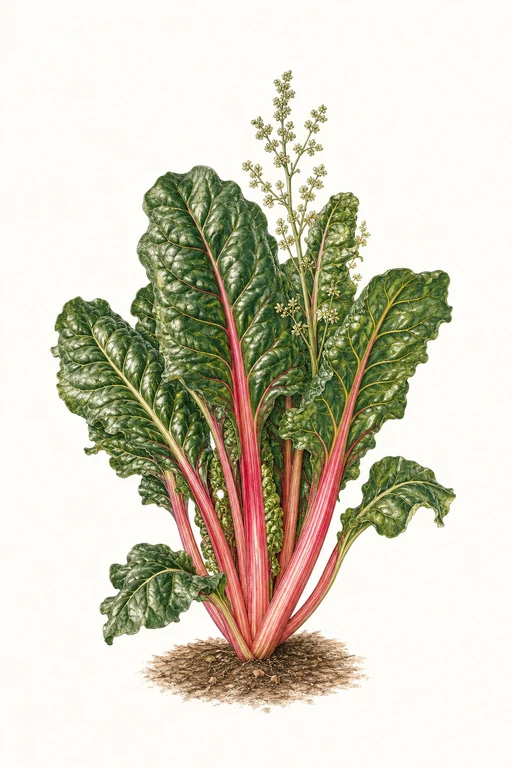
Chard 'Rhubarb'
Tender, rhubarb-bright stems rise with a succulent snap and a gently sweet, mineral edge that tastes like springtime in the garden.
Chard ‘Rhubarb’ forms an upright clump of glossy, deeply veined leaves over vivid, blushing stalks—ideal for roasting, sautéing, and silky sauces, and equally delightful for fresh use when you want color and crunch. With about 55 days to maturity, it’s a quick, rewarding choice for gardeners who love bold, edible beauty all season long.
Light: Full SunMaturity: 55 DaysHabit: Rosette
Planting schedules and alerts are optimized for Columbus (Zone 6b).
Crop Dates
| Milestone | Date |
|---|---|
| Start Indoors | Direct Sow |
| Last Frost | Apr 25th |
| Transplant / Sow Outdoors | Apr 25th |
| Harvest Begins | Jun 19th |
| Harvest Ends | Oct 16th |
Crop Details
| Trait | Value |
|---|---|
| Days to Maturity | 55 |
| Sun Requirements | Full Sun |
| Growth Habit | Rosette |
| Support Needed | None |
| Planting Depth | Normal |
| Germination Temp (°F) | 70 |
| Min Soil Temp (°F) | 40 |
| Min Night Temp (°F) | 35 |
| Harden Off (days) | 5 |
Culinary Notes

Chef's Note
This rhubarb-bright chard is built for contrast: the stalks hold a juicy snap while the leaves turn luxuriously silky. Go for lemony fat and salty cheese or beans—this variety’s mineral edge plays beautifully once it’s warm, not boiled to dull mush.

Best Uses
- quick sautés where the stems stay crisp and the leaves go glossy
- roasting for caramel edges on stalks and tender leaf collapse
- blended, silky sauces or purées to coat pasta or smear on bread
- warm salads: wilt the greens lightly, keep a bit of crunch in the stalks

Flavor Profile

Frequently Asked Questions
What pest or disease is most likely on Swiss chard (Beta vulgaris var. cicla) and what should I do?
How often should I water Swiss chard during the main growing phase?
How do I tell when Swiss chard ‘Rhubarb’ is ready to harvest?
Sowing Tips

Transplant Conditions
Wait until soil reaches 40°F and nights stay above 35°F before moving outdoors. Harden off for 5 days first.
Expert Note

For best tender stems/leaves, keep plants evenly watered and harvest by removing outer leaves while the crown stays undisturbed.