
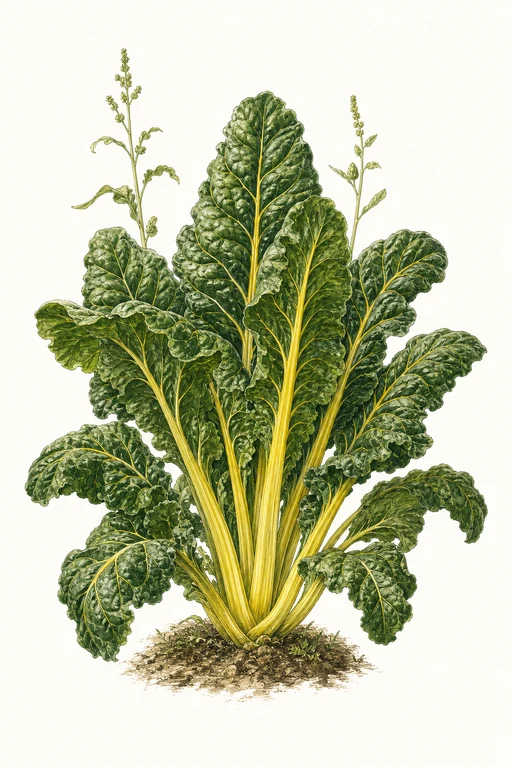
Chard Swiss Giant
Sink your spoon into the lush, deeply veined leaves of Swiss Giant Chard, where tender ribs rise in bold, luminous color and the foliage stays beautifully succulent.
Expect a crisp, juicy bite with a gentle, earthy sweetness that holds its charm from first harvest through repeated cuttings. Grow this standout for vibrant fresh salads, quick sauté-style skillet dishes, and showy braises—its generous size makes every bunch feel like a centerpiece.
Light: Part SunMaturity: 50 DaysHabit: Rosette
Planting schedules and alerts are optimized for Columbus (Zone 6b).
Crop Dates
| Milestone | Date |
|---|---|
| Start Indoors | Direct Sow |
| Last Frost | Apr 25th |
| Transplant / Sow Outdoors | Apr 25th |
| Harvest Begins | Jun 14th |
| Harvest Ends | Oct 16th |
Crop Details
| Trait | Value |
|---|---|
| Days to Maturity | 50 |
| Sun Requirements | Part Sun |
| Growth Habit | Rosette |
| Support Needed | None |
| Planting Depth | Normal |
| Germination Temp (°F) | 65 |
| Min Soil Temp (°F) | 40 |
| Min Night Temp (°F) | 30 |
| Harden Off (days) | 5 |
Culinary Notes

Chef's Note
Swiss Giant chard has enough rib crunch to stand up to heat while the greens stay juicy, so it won’t collapse into swampy bitterness. Use it hot and glossy—finish with lemon and something salty/aged (like parmesan) to sharpen that mineral sweetness.

Best Uses
- hot-and-fast skillet sauté (oil + salt, then deglaze briefly) to keep leaves snappy
- braising in a shallow pool until ribs are silky but the greens keep their lift
- tossing into warm grain bowls where it softens without turning mushy
- thinly slicing raw leaves for salads that can handle bold vinaigrettes

Flavor Profile

Kitchen Pairings
Frequently Asked Questions
What pest or disease commonly affects Swiss chard (Beta vulgaris var. cicla) and how can I control it?
How often should I water Swiss chard during its main growing phase?
How do I know when Swiss chard (Beta vulgaris var. cicla) is ready to harvest?
Sowing Tips

Transplant Conditions
Wait until soil reaches 40°F and nights stay above 30°F before moving outdoors. Harden off for 5 days first.
Expert Note

For best flavor and tenderness, keep chard cool and consistently moist; harvest outer leaves early and avoid letting plants bolt in hot weather.