
Chard 'White'
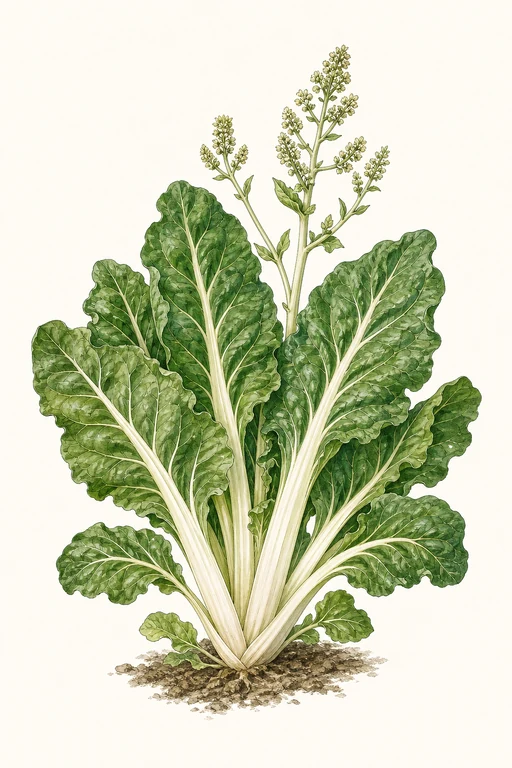
Silky, crisp ribs in luminous white rise from a tidy rosette, offering a cool, clean sweetness with a gentle, mineral edge.
Chard ‘White’ forms tender leaves with a smooth, slightly crinkled surface and a succulent bite that holds its character beautifully when roasted, sautéed, or folded into hearty sauces. Grow it for fresh salads early on, then let it mature into a reliable, colorful centerpiece for your seasonal greens—50 days from sowing to harvest-ready leaves.
Light: Full SunMaturity: 50 DaysHabit: Rosette
Planting schedules and alerts are optimized for Columbus (Zone 6b).
Crop Dates
| Milestone | Date |
|---|---|
| Start Indoors | Direct Sow |
| Last Frost | Apr 25th |
| Transplant / Sow Outdoors | Apr 18th |
| Harvest Begins | Jun 7th |
| Harvest Ends | Oct 16th |
Crop Details
| Trait | Value |
|---|---|
| Days to Maturity | 50 |
| Sun Requirements | Full Sun |
| Growth Habit | Rosette |
| Support Needed | None |
| Planting Depth | Normal |
| Germination Temp (°F) | 65 |
| Min Soil Temp (°F) | 40 |
| Min Night Temp (°F) | 32 |
| Harden Off (days) | 5 |
Culinary Notes

Chef's Note
Swiss chard ’White’ is built for contrast: the luminous ribs stay crisp-tender while the leaves stay juicy, so it performs whether you’re doing a fast sauté or a hotter roast. Pair it with bright acid and salty cheeses—its mild sweetness and mineral edge love lemony finishes and creamy dairy folds.

Best Uses
- quick sauté in a hot pan with olive oil until the ribs are just tender and leaves stay glossy
- roast ribs and fold roasted leaves into a warm grain bowl (won’t turn to mush)
- blanch and squeeze-dry, then stir into ricotta or béchamel-style sauces
- use raw or lightly dressed in early-season salads where the crunch stays intact

Flavor Profile

Kitchen Pairings
Frequently Asked Questions
What pest or disease most commonly affects Swiss chard (Beta vulgaris var. cicla), and what should I do?
How often should I water Swiss chard during the main growing phase to keep leaves tender?
How can I tell when chard 'White' is ready to harvest?
Sowing Tips

Transplant Conditions
Wait until soil reaches 40°F and nights stay above 32°F before moving outdoors. Harden off for 5 days first.
Expert Note

For sweetest flavor, keep plants cool and harvest outer leaves regularly once stems are thick enough for crisp salads.