
Cheddar Cauliflower
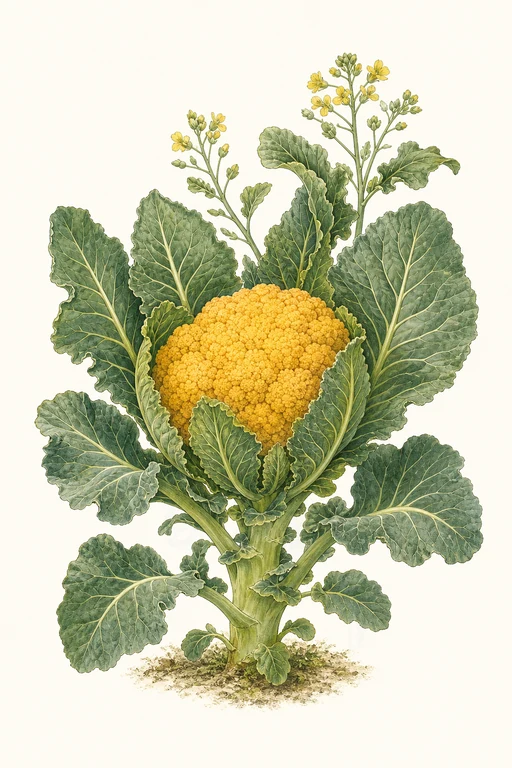
Sink into the creamy, mellow allure of Cheddar Cauliflower—its curd forms a luminous warm cheddar-gold dome with a fine, velvety texture and a gentle, nutty sweetness.
Expect sturdy plants that hold their color beautifully, delivering substantial heads at about 75 days for standout fresh-market appeal. Ideal for roasting and for show-stopping golden florets in gratins, sauces, and pickling-style preparations—grow it for flavor you can see as well as taste.
Light: Full SunMaturity: 75 DaysHabit: Upright
Planting schedules and alerts are optimized for Columbus (Zone 6b).
Crop Dates
| Milestone | Date |
|---|---|
| Start Indoors | Mar 28th |
| Last Frost | Apr 25th |
| Transplant / Sow Outdoors | Apr 25th |
| Harvest Begins | Jul 9th |
| Harvest Ends | Oct 16th |
Crop Details
| Trait | Value |
|---|---|
| Days to Maturity | 75 |
| Sun Requirements | Full Sun |
| Growth Habit | Upright |
| Support Needed | None |
| Planting Depth | Normal |
| Germination Temp (°F) | 75 |
| Min Soil Temp (°F) | 40 |
| Min Night Temp (°F) | 35 |
| Harden Off (days) | 6 |
Culinary Notes

Chef's Note
Cheddar Cauliflower is built for heat: its curd stays tight and creamy while the nutty sweetness reads as warm and golden, not sulfurous. Use sharp, assertive partners (mustard, lemon, smoked spice, aged cheddar) to keep the flavor lively and the texture proudly velvety.

Best Uses
- roast until the edges bronze and the centers stay creamy
- golden gratin where it melts into a cohesive, spoonable bake
- blanch-and-fry or pan-sear for crisp outside/soft inside contrast
- quick pickling-style bites where the natural sweetness balances vinegar

Flavor Profile

Kitchen Pairings
Frequently Asked Questions
What pest or disease most commonly affects Brassica oleracea var. botrytis (Cheddar cauliflower), and how can I control it?
How often should I water Cheddar cauliflower during head formation, and what soil moisture level should I aim for?
How do I tell when Cheddar cauliflower is ready to harvest?
Sowing Tips

Transplant Conditions
Wait until soil reaches 40°F and nights stay above 35°F before moving outdoors. Harden off for 6 days first.
Expert Note

Start cauliflower indoors in cool conditions and transplant to firm, well-amended soil so heads form before hot summer weather stresses the plants.