
Cherokee Purple
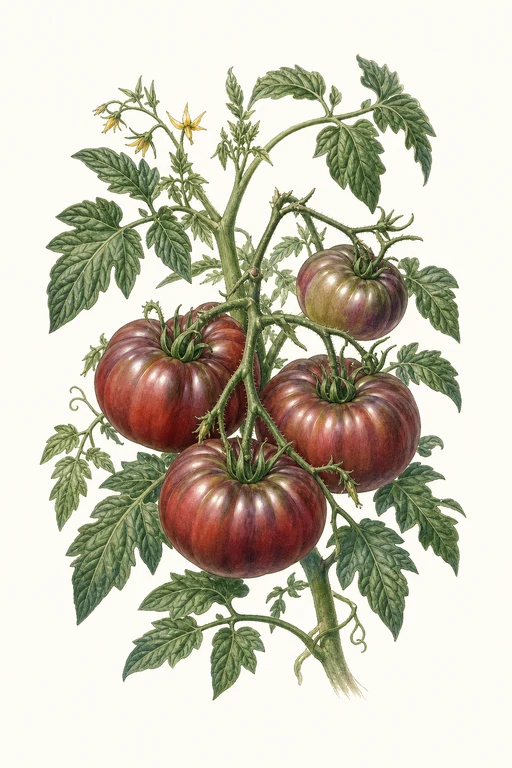
Velvety, smoky-sweet flesh with a rich, wine-dark tang—Cherokee Purple delivers a dramatic, dusky flavor that feels almost perfumed as it ripens.
The fruit are large and irregularly ribbed, with a satin-smooth skin that turns from green to deep purple-brown at the shoulders, then opens to a juicy, seed-studded interior that’s tender yet substantial. Ideal for bold slices on the plate, as well as for thick, colorful sauces that showcase its complex, old-world character.
Light: Full SunMaturity: 85 DaysHabit: Indeterminate
Crop Dates : 10a
| Milestone | Date |
|---|---|
| Climate | Frost-Free Climate |
| Growing Approach | Continuous Production |
Crop Details
| Trait | Value |
|---|---|
| Days to Maturity | 85 |
| Sun Requirements | Full Sun |
| Growth Habit | Indeterminate |
| Support Needed | Cage |
| Planting Depth | Deep |
| Germination Temp (°F) | 75 |
| Min Soil Temp (°F) | 60 |
| Min Night Temp (°F) | 50 |
| Harden Off (days) | 10 |
Culinary Notes

Chef's Note
Cherokee Purple gives you that rare heirloom combo: velvety flesh that slices cleanly, plus a smoky-sweet tang that tastes like it’s been gently roasted even when it’s raw. It’s built for plates and reductions—reduce it and the wine-dark acids turn glossy, clinging, and complex rather than watery.

Best Uses
- thick slice tomato plates (salt, oil, and a quick crack of pepper—no hiding)
- old-world, colorful sauces that reduce until winey and clingy
- grilled or seared tomato halves for an extra smoky top-note
- sandwich slicing where the flesh stays intact instead of collapsing

Flavor Profile

Kitchen Pairings
Frequently Asked Questions
What pest or disease most commonly affects Solanum tuberosum (Cherokee Purple), and what should I do?
How often should I water Cherokee Purple potatoes during the main growing phase?
How do I tell when Cherokee Purple potatoes are ready to harvest at about 85 days?
Sowing Tips

Transplant Conditions
Wait until soil reaches 60°F and nights stay above 50°F before moving outdoors. Harden off for 10 days first.
Expert Note

Start Cherokee Purple indoors for sturdy transplants, then wait to transplant until soil is consistently warm (around 60°F+) to prevent cold-stunting.