
Cheyenne Spirit
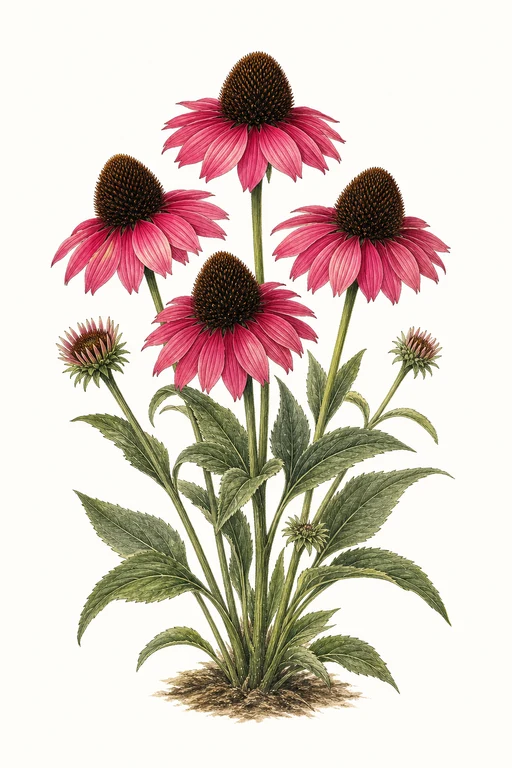
A sunlit bloom with a commanding presence—Cheyenne Spirit opens into rich, velvety petals that glow in warm magenta-rose tones, crowned by a dark, sculptural center that seems almost inked in.
The flowers hold their shape with a sturdy, upright texture, making a long-lasting show in the garden and a favorite for pollinators drawn to its bold color. Grow Cheyenne Spirit for a native-style, dependable perennial display that brings striking, living color from midsummer into early fall.
Light: Full SunMaturity: 90 DaysHabit: Upright
Crop Dates : 10a
| Milestone | Date |
|---|---|
| Start Indoors | — |
| Climate | Frost-Free Climate |
| Transplant / Sow Outdoors | Oct 1st |
| Harvest Begins | Dec 30th |
| Harvest Ends | Feb 28th |
Crop Details
| Trait | Value |
|---|---|
| Days to Maturity | 90 |
| Sun Requirements | Full Sun |
| Growth Habit | Upright |
| Support Needed | None |
| Planting Depth | Surface |
| Germination Temp (°F) | 70 |
| Min Soil Temp (°F) | 50 |
| Min Night Temp (°F) | 40 |
| Harden Off (days) | 7 |
Culinary Notes

Chef's Note
Edible here, but treat Echinacea like a potent foraged herb—its petals/head material runs earthy and bitter with a dry herbal bite. Use it in small doses so it perfumes the dish without taking over, especially with honey, citrus, and ginger to round the edge.

Best Uses
- use petals sparingly in mixed herb salads for a bitter-leaning lift
- steep petals/heads into a tea with a dry, medicinal-leaning profile
- infuse petals into honey or simple syrup for a bitter-herbal floral note
- make a small-batch tonic cordial where the bitterness can bloom and settle

Flavor Profile

Kitchen Pairings
Frequently Asked Questions
What pest or disease problem commonly affects Echinacea purpurea (Purple Coneflower), and how can I treat it?
How often should I water Purple Coneflower (Echinacea purpurea) during its main growing phase?
How do I tell when Echinacea purpurea is ready to harvest?
Sowing Tips

Transplant Conditions
Wait until soil reaches 50°F and nights stay above 40°F before moving outdoors. Harden off for 7 days first.
Expert Note

For best establishment, stratify seed if available, keep seedlings evenly moist, and transplant after nights are reliably mild while avoiding wet, heavy soils.