
Chinese Eggplant
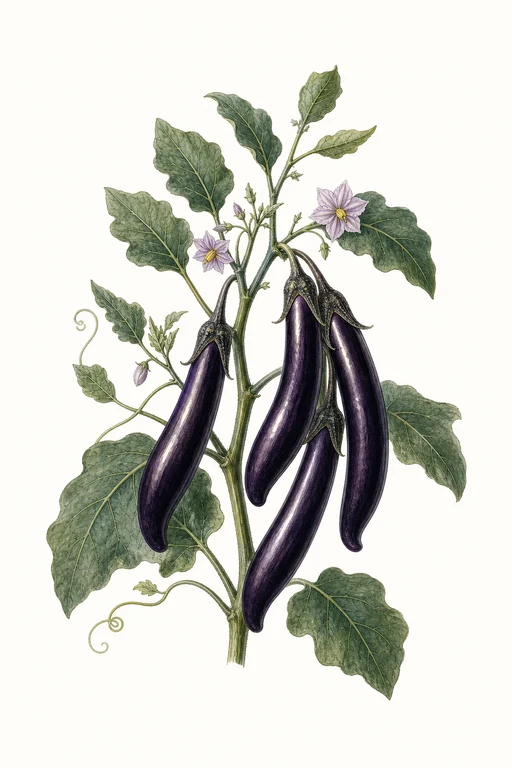
Velvet-smooth and richly glossy, Chinese Eggplant brings a long, slender silhouette to the garden with a deep inky-purple sheen that seems to drink the light.
The flesh is tender and pleasantly mild, with a fine, creamy texture that shines in quick-roasting applications and also performs beautifully for fresh, sliced preparations, as well as savory sauces and pickling-style preserves. At about 75 days, this variety rewards patient growers with an abundant harvest of elegant fruits that look as good as they taste.
Light: Full SunMaturity: 75 DaysHabit: Upright
Planting schedules and alerts are optimized for Columbus (Zone 6b).
Crop Dates
| Milestone | Date |
|---|---|
| Start Indoors | Mar 7th |
| Last Frost | Apr 25th |
| Transplant / Sow Outdoors | Jun 20th |
| Harvest Begins | Sep 3rd |
| Harvest Ends | Oct 16th |
Crop Details
| Trait | Value |
|---|---|
| Days to Maturity | 75 |
| Sun Requirements | Full Sun |
| Growth Habit | Upright |
| Support Needed | Stake |
| Planting Depth | Normal |
| Germination Temp (°F) | 80 |
| Min Soil Temp (°F) | 60 |
| Min Night Temp (°F) | 50 |
| Harden Off (days) | 10 |
Culinary Notes

Chef's Note
Chinese eggplant cooks faster than the big purple globe types, with tender flesh that goes from firm to creamy in the time it takes to get real color. Use it when you want eggplant that stays silky—not spongy—so it grips soy-miso, garlic-ginger, and chili heat without tasting bitter.

Best Uses
- quick high-heat roasting until the flesh collapses and browns
- thin slicing for dressed, warm salads where it still holds a creamy bite
- pan-seared eggplant “steaks” with a glossy caramelized finish
- miso/soy-forward savory sauces and quick braises
- pickling-style preserves for tangy, softly spiced bites

Flavor Profile

Kitchen Pairings
Frequently Asked Questions
What pest or disease commonly affects Solanum melongena (Chinese eggplant), and what should I do if I see it?
How often should I water Chinese eggplant during the main growing phase to keep it productive?
How do I tell when Solanum melongena is ready to harvest?
Sowing Tips

Transplant Conditions
Wait until soil reaches 60°F and nights stay above 50°F before moving outdoors. Harden off for 10 days first.
Expert Note

Warm, steady conditions matter most for eggplant—transplant only when soil is reliably warm and protect from cool nights the first 1–2 weeks.