
Chinese String
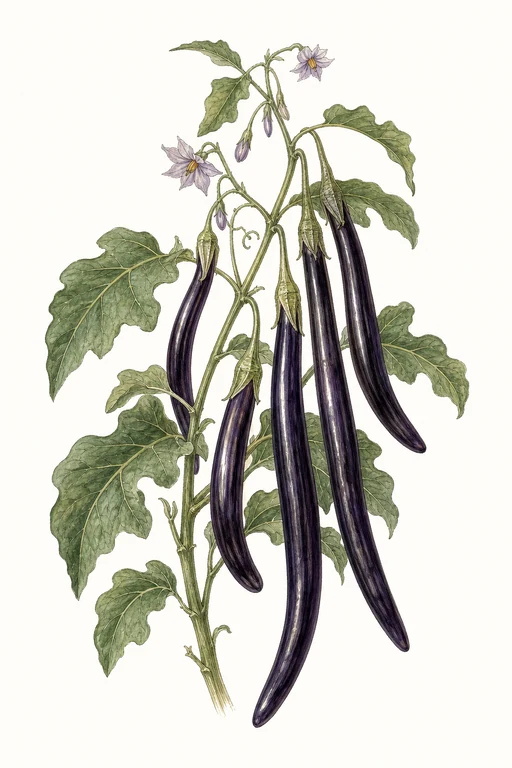
Silky and quietly dramatic, Chinese String eggplant ripens to long, slender fruits with a glossy, inky sheen that catches the light like lacquer.
The flesh is tender and creamy with a mild, savory depth—ideal for quick-roasting favorites, vibrant stir-fry style dishes, and silky sauces where its elegant shape shines. Grow it for a steady harvest of graceful pods that stay pleasantly refined rather than turning woody, rewarding gardeners from first picking through the season’s end.
Light: Full SunMaturity: 70 DaysHabit: Upright
Planting schedules and alerts are optimized for Columbus (Zone 6b).
Crop Dates
| Milestone | Date |
|---|---|
| Start Indoors | Mar 14th |
| Last Frost | Apr 25th |
| Transplant / Sow Outdoors | Jun 20th |
| Harvest Begins | Aug 29th |
| Harvest Ends | Oct 16th |
Crop Details
| Trait | Value |
|---|---|
| Days to Maturity | 70 |
| Sun Requirements | Full Sun |
| Growth Habit | Upright |
| Support Needed | Stake |
| Planting Depth | Normal |
| Germination Temp (°F) | 80 |
| Min Soil Temp (°F) | 60 |
| Min Night Temp (°F) | 50 |
| Harden Off (days) | 10 |
Culinary Notes

Chef's Note
This Chinese String eggplant stays tender and creamy rather than going woody, so it loves fast, hot cooking where the flesh turns luxurious instead of spongey. Slice it long for lacquer-soft edges in stir-fries, or roast it hard-and-fast so the interior collapses into a silky, sauce-hugging spoonful.

Best Uses
- quick-roasting under high heat until the flesh collapses creamy
- stir-fry or wok-cook with garlic/ginger where it stays tender instead of turning spongy
- cooks-down silky sauces and braises that cling to noodles or rice
- cut into slender batons for crispy-skinned pan-fry or shallow-fry

Flavor Profile

Kitchen Pairings
Frequently Asked Questions
What’s the most common pest or disease problem on Solanum melongena (Chinese string eggplant), and how do I manage it?
How often should I water Chinese string eggplant during the main growing phase?
How can I tell when Solanum melongena (Chinese string eggplant) is ready to harvest?
Sowing Tips

Transplant Conditions
Wait until soil reaches 60°F and nights stay above 50°F before moving outdoors. Harden off for 10 days first.
Expert Note

Warm it up: transplant into soil at/above 60°F and keep steady moisture to maximize long, sweet fruit quality.