
Chocolate Habanero
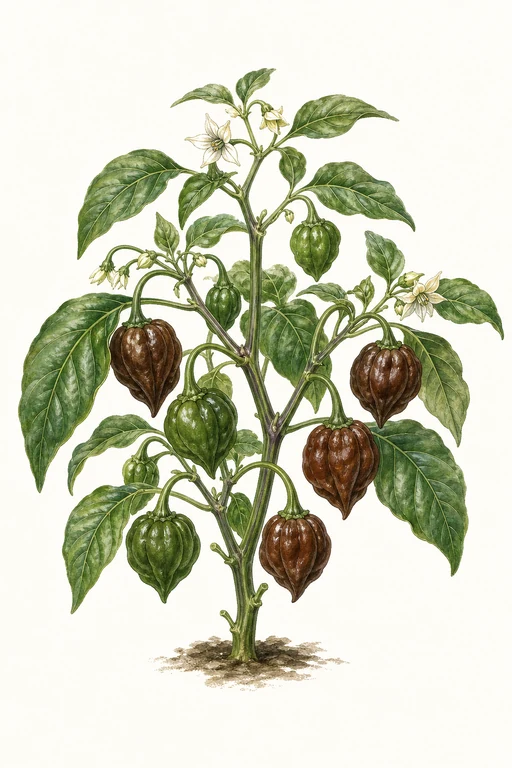
Sink your senses into Chocolate Habanero’s smoky, dark-fruited allure—ripe pods turn a rich chocolate-brown with a subtle, velvety sheen and a distinctly fruity heat that lingers like warm cocoa and dried mango.
The peppers are compact and lantern-shaped, with thick, crisp walls that hold their character for bold salsas, fiery sauces, and pickled accents. Grow this 110-day standout for a dramatic, garden-to-jar flavor moment that’s as striking on the plant as it is in the glass.
Light: Full SunMaturity: 110 DaysHabit: Bush
Planting schedules and alerts are optimized for Columbus (Zone 6b).
Crop Dates
| Milestone | Date |
|---|---|
| Start Indoors | Feb 28th |
| Last Frost | Apr 25th |
| Transplant / Sow Outdoors | Jun 20th |
| Harvest Begins | Oct 8th |
| Harvest Ends | Oct 16th |
Crop Details
| Trait | Value |
|---|---|
| Days to Maturity | 110 |
| Sun Requirements | Full Sun |
| Growth Habit | Bush |
| Support Needed | Stake |
| Planting Depth | Normal |
| Germination Temp (°F) | 80 |
| Min Soil Temp (°F) | 60 |
| Min Night Temp (°F) | 50 |
| Harden Off (days) | 10 |
Culinary Notes

Chef's Note
Chocolate Habanero hits with a smoky, dark-fruit warmth and a heat that lingers, not one that burns out instantly. The thick walls make it ideal for sauces and salsas where you want the pepper to stay assertive after blending and reduction.

Best Uses
- smoky roasted-chili salsa where the heat stays vivid
- hot sauce base that needs a cocoa-mango halo (blend with vinegar and reduce)
- quick pickles/chipotle-style brine for crunchy heat
- chili pastes or mole-adjacent sauces where thickness carries body

Flavor Profile

Frequently Asked Questions
What pest or disease most commonly affects Capsicum chinense (chocolate habanero) and what should I do?
How often should I water chocolate habanero plants during the main growing phase (after transplanting)?
How can I tell when chocolate habanero peppers (Capsicum chinense) are ready to harvest?
Sowing Tips

Transplant Conditions
Wait until soil reaches 60°F and nights stay above 50°F before moving outdoors. Harden off for 10 days first.
Expert Note

For maximum color and heat, keep soil consistently warm (60–75°F) and avoid transplanting until nights reliably stay above 50°F.