
Claytonia
Tender, succulent leaves unfurl with a cool, fresh snap—brightly verdant and delicately mild, with a faintly nutty, garden-sweet charm.
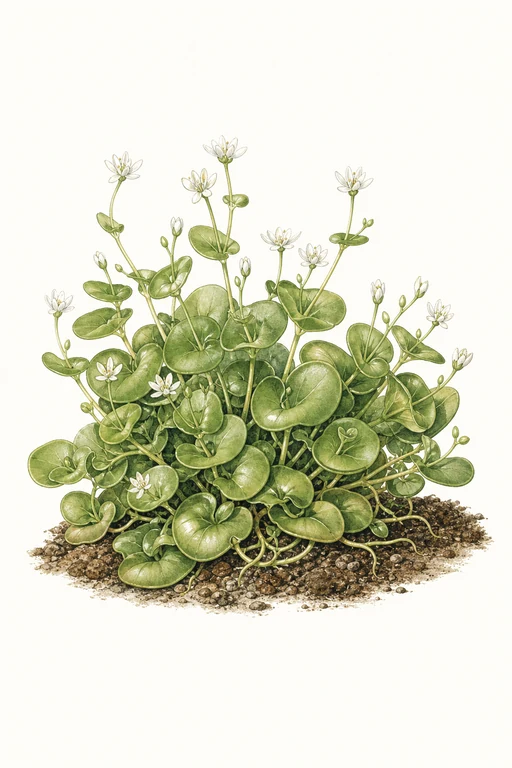
Claytonia (miner’s lettuce) forms a low, spreading rosette that stays pleasantly tender at about 35 days, making it a favorite for quick, specialty-greens harvests. Grow it for its delicate texture and clean flavor in fresh salads, as a delicate bed for warm dishes, or stirred into light sauces and sautés for a vivid green finish.
Light: Part SunMaturity: 35 DaysHabit: Rosette
Planting schedules and alerts are optimized for Columbus (Zone 6b).
Crop Dates
| Milestone | Date |
|---|---|
| Start Indoors | Direct Sow |
| Last Frost | Apr 25th |
| Transplant / Sow Outdoors | Apr 25th |
| Harvest Begins | May 30th |
| Harvest Ends | Oct 16th |
Crop Details
| Trait | Value |
|---|---|
| Days to Maturity | 35 |
| Sun Requirements | Part Sun |
| Growth Habit | Rosette |
| Support Needed | None |
| Planting Depth | Surface |
| Germination Temp (°F) | 55 |
| Min Soil Temp (°F) | 40 |
| Min Night Temp (°F) | 28 |
| Harden Off (days) | Not Required |
Culinary Notes

Chef's Note
Miner’s lettuce is all about that cool, crisp-tender bite with a gentle, nutty sweetness—serve it raw or just barely heat it so the leaves stay springy instead of collapsing. It loves bright acidity and creamy, tangy cheeses, which balance its delicate flavor without overpowering it.

Best Uses
- raw in a quick spring salad where it won’t get bullied by heavy dressing
- lightly sautéed or steamed as a vivid green side—keep it brief so it stays crisp-tender
- folded into warm grain or potato dishes as a fresh-tasting bed that lightly wilts at the edges
- stirred into a loose, herby sauce at the last moment for color and soft crunch

Flavor Profile

Frequently Asked Questions
What pest or disease commonly affects Claytonia perfoliata, and how can I prevent it?
How often should I water Claytonia perfoliata during peak growth?
How can I tell when Claytonia perfoliata is ready to harvest?
Sowing Tips

Transplant Conditions
Wait until soil reaches 40°F and nights stay above 28°F before moving outdoors.
Expert Note

Sow thinly in consistently cool conditions (or partial shade) and keep the soil evenly moist for tender leaves; bolt resistance improves with cooler temperatures.