
Climbing Gourd
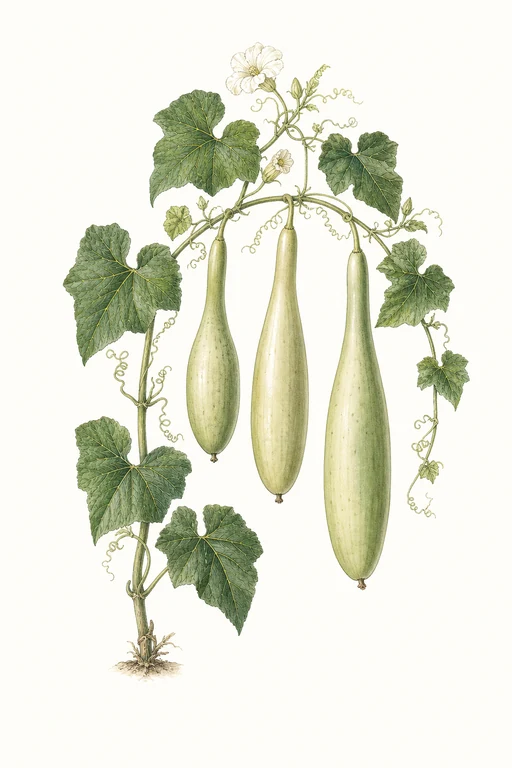
Fragrant, cool-scented vines give way to long, graceful Bottle Gourds with a smooth, pale green skin that ripens to a mellow, creamy cast.
The flesh is crisp and watery at first, then turns pleasantly tender as the gourds mature—ideal for roasting until softly yielding, or for fresh use in bright, garden-forward preparations. Grow Climbing Gourd for its vigorous, space-saving climb and its dependable, showy harvest over a full 90 days.
Light: Full SunMaturity: 90 DaysHabit: Vine
Planting schedules and alerts are optimized for Columbus (Zone 6b).
Crop Dates
| Milestone | Date |
|---|---|
| Start Indoors | Apr 11th |
| Last Frost | Apr 25th |
| Transplant / Sow Outdoors | Apr 25th |
| Harvest Begins | Jul 24th |
| Harvest Ends | Oct 16th |
Crop Details
| Trait | Value |
|---|---|
| Days to Maturity | 90 |
| Sun Requirements | Full Sun |
| Growth Habit | Vine |
| Support Needed | Trellis |
| Planting Depth | Normal |
| Germination Temp (°F) | 75 |
| Min Soil Temp (°F) | 65 |
| Min Night Temp (°F) | 55 |
| Harden Off (days) | 10 |
Culinary Notes

Chef's Note
Bottle gourd starts watery and crisp, then sweetens and turns silky at the edges once roasted—perfect for getting flavor without heaviness. It loves heat plus brightness: keep it moving in the pan or give it a hot roast, then hit it with lime/vinegar so it tastes sharp, not dull.

Best Uses
- roast wedges until softly yielding and lightly browned
- quick-sauté with garlic and a bright vinegar or citrus finish
- stew or curry where it holds shape without turning mushy
- thinly sliced fresh in salads for a cool, watery crunch

Flavor Profile

Kitchen Pairings
Frequently Asked Questions
What pest or disease commonly affects Lagenaria siceraria (climbing gourd), and how do I manage it?
How often should I water Lagenaria siceraria during the main growing phase?
When are Lagenaria siceraria climbing gourds ready to harvest?
Sowing Tips

Transplant Conditions
Wait until soil reaches 65°F and nights stay above 55°F before moving outdoors. Harden off for 10 days first.

Direct Sow Preferred
Sensitive roots — does not transplant well. If starting indoors, use biodegradable pots and disturb roots as little as possible when moving outdoors.
Expert Note

Start planning for strong vertical trellising early—bottle gourd vines are vigorous and benefit from even early training to reduce fruit scarring.