
Common Buckwheat
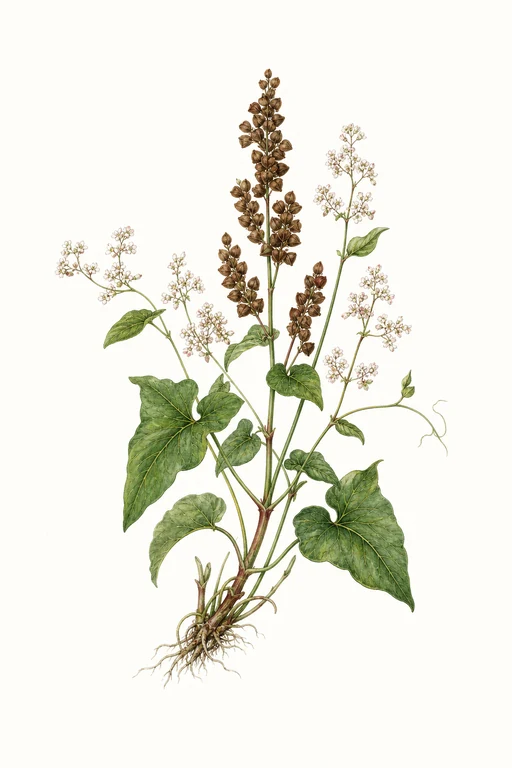
Fragrant, honeyed blossoms rise above a compact, quick-growing stand of Common Buckwheat, creating a soft, cloudlike spectacle with a gentle, nutty allure.
The seeds develop in tidy, upright clusters, offering a pleasantly earthy flavor and a pleasantly firm, pearly texture that holds its character beautifully. Grow Common Buckwheat for its rapid 35-day turnaround and its ability to enrich the garden with both beauty and bountiful seed.
Light: Full SunMaturity: 35 DaysHabit: Upright
Planting schedules and alerts are optimized for Columbus (Zone 6b).
Crop Dates
| Milestone | Date |
|---|---|
| Start Indoors | Direct Sow |
| Last Frost | Apr 25th |
| Transplant / Sow Outdoors | Apr 25th |
| Harvest Begins | May 30th |
| Harvest Ends | Oct 16th |
Crop Details
| Trait | Value |
|---|---|
| Days to Maturity | 35 |
| Sun Requirements | Full Sun |
| Growth Habit | Upright |
| Support Needed | None |
| Planting Depth | Normal |
| Germination Temp (°F) | 55 |
| Min Soil Temp (°F) | 45 |
| Min Night Temp (°F) | 35 |
| Harden Off (days) | Not Required |
Culinary Notes

Chef's Note
Common buckwheat’s fast, fragrance-forward character shows up as a distinct toasty earthiness, with groats that stay pearly and firm instead of turning mushy. Built for jobs where you want texture—kasha, hearty crepes, or a toasted-groat salad—especially alongside butter, mushrooms, and smoky fish.

Best Uses
- dry-roast groats then cook for a chewy, fragrant pilaf
- cook as fluffy kasha-style buckwheat for a spoonable grain base
- grind into buckwheat flour for sturdy crepes or galettes
- toast whole groats and fold into salads for nutty crunch

Flavor Profile

Kitchen Pairings
Frequently Asked Questions
What pest or disease commonly affects Fagopyrum esculentum (common buckwheat), and what should I do?
How often should I water Fagopyrum esculentum during its main growing phase?
How can I tell when common buckwheat (Fagopyrum esculentum) is ready to harvest?
Sowing Tips

Transplant Conditions
Wait until soil reaches 45°F and nights stay above 35°F before moving outdoors.
Expert Note

Sow thickly for weed suppression and soil improvement; keep moisture consistent until seedlings establish, then let it grow quickly in cool-to-warm conditions.