
Cora
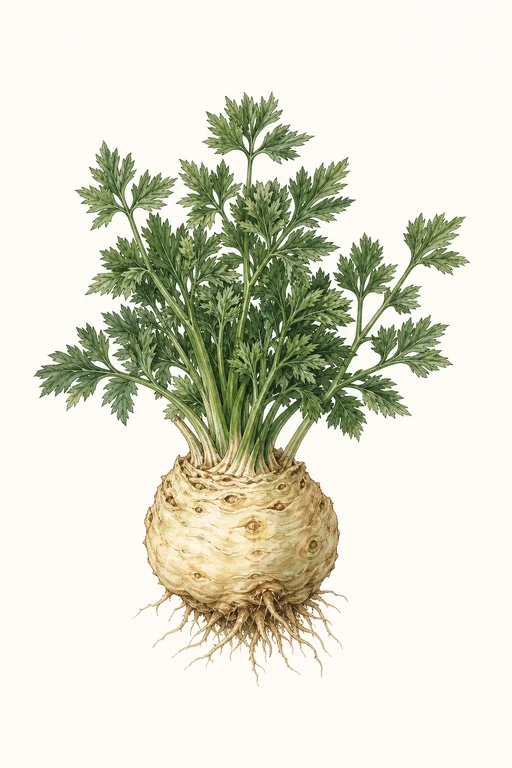
Cora celeriac brings a richly aromatic, cellar-sweet flavor with a clean, nutty edge—its knobby crown holds a creamy, tender bite once fully developed.
At maturity, the bulb forms a squat, well-anchored shape with a smooth, pale skin that peels away to reveal an ivory interior prized for its velvety texture. Grow Cora for standout roasts, gratins, and silky purées, or for crisp, tangy pickles that showcase its distinctive celeriac character.
Light: Part SunMaturity: 100 DaysHabit: Upright
Location not set yet
Location not set yet
Enter your ZIP for local crop dates
Cora Planting Dates by USDA Zone
Estimated US hardiness-zone windows for sow, transplant, and harvest. Enter a US ZIP above for exact local dates, or open a zone below.
| Zone | Start Indoors | Sow / Transplant | Harvest |
|---|---|---|---|
| Zone 1a | Protected Environment Only | ||
| Zone 1b | Protected Environment Only | ||
| Zone 2a | Protected Environment Only | ||
| Zone 2b | Mar 6th | May 8th | Aug 16th – Aug 25th |
| Zone 3a | Mar 6th | May 8th | Aug 16th – Sep 1st |
| Zone 3b | Mar 10th | May 12th | Aug 20th – Sep 21st |
| Zone 4a | Mar 6th | May 8th | Aug 16th – Sep 24th |
| Zone 4b | Mar 4th | May 6th | Aug 14th – Sep 27th |
| Zone 5a | Feb 27th | May 1st | Aug 9th – Sep 30th |
| Zone 5b | Feb 23rd | Apr 27th | Aug 5th – Oct 5th |
| Zone 6a | Feb 20th | Apr 24th | Aug 2nd – Oct 10th |
| Zone 6b | Feb 14th | Apr 18th | Jul 27th – Oct 16th |
| Zone 7a | Feb 9th | Apr 13th | Jul 22nd – Oct 20th |
| Zone 7b | Jan 30th | Apr 3rd | Jul 12th – Oct 28th |
| Zone 8a | Jan 21st | Mar 25th | Jul 3rd – Nov 5th |
| Zone 8b | Jan 12th | Mar 16th | Jun 24th – Nov 12th |
| Zone 9a | Dec 26th | Feb 27th | Jun 7th – Nov 26th |
| Zone 9b | Dec 1st | Feb 2nd | May 13th – Dec 9th |
| Zone 10a | — | Oct 1st | Jan 9th – Feb 28th |
| Zone 10b | — | Oct 1st | Jan 9th – Feb 28th |
| Zone 11a | — | Oct 1st | Jan 9th – Feb 28th |
| Zone 11b | — | Oct 1st | Jan 9th – Feb 28th |
| Zone 12a | — | Oct 1st | Jan 9th – Feb 28th |
| Zone 12b | — | Oct 1st | Jan 9th – Feb 28th |
| Zone 13a | — | Oct 1st | Jan 9th – Feb 28th |
| Zone 13b | — | Oct 1st | Jan 9th – Feb 28th |
Crop Details
| Trait | Value |
|---|---|
| Days to Maturity | 100 |
| Sun Requirements | Part Sun |
| Growth Habit | Upright |
| Support Needed | None |
| Planting Depth | Normal |
| Germination Temp (°F) | 70 |
| Min Soil Temp (°F) | 45 |
| Min Night Temp (°F) | 35 |
| Harden Off (days) | 7 |
Culinary Notes

Chef's Note
Cora celeriac earns the pan because it turns velvety without going woolly, and its nutty, aromatic sweetness shows up strongest after browning—then mellowing into cream. Treat it like a potato’s more perfumed cousin: roast first for flavor, purée for silk, or pickle for a sharp crunch that doesn’t get mushy.

Best Uses
- low-and-slow roast until caramel-browned at the edges, then purée or spoonable sides
- silky gratin with crème fraîche (or bechamel) and a restrained crumble of nutty cheese
- smooth purée where it acts like a spoonable stand-in for heavier starches
- quick refrigerator pickles for crisp, tangy slices that keep their bite

Flavor Profile

Kitchen Pairings
Frequently Asked Questions
What pest or disease commonly affects Apium graveolens var. rapaceum (celeriac), and how can I manage it?
How often should I water celeriac during the main growing phase to prevent problems?
How do I tell when celeriac is ready to harvest?
Sowing Tips

Transplant Conditions
Wait until soil reaches 45°F and nights stay above 35°F before moving outdoors. Harden off for 7 days first.
Expert Note

For best swollen bulbs, keep seedlings evenly moist and avoid letting them dry out after transplanting (inconsistent moisture can lead to rough, hollow bulbs).