
Crimson Flowered Borlotto
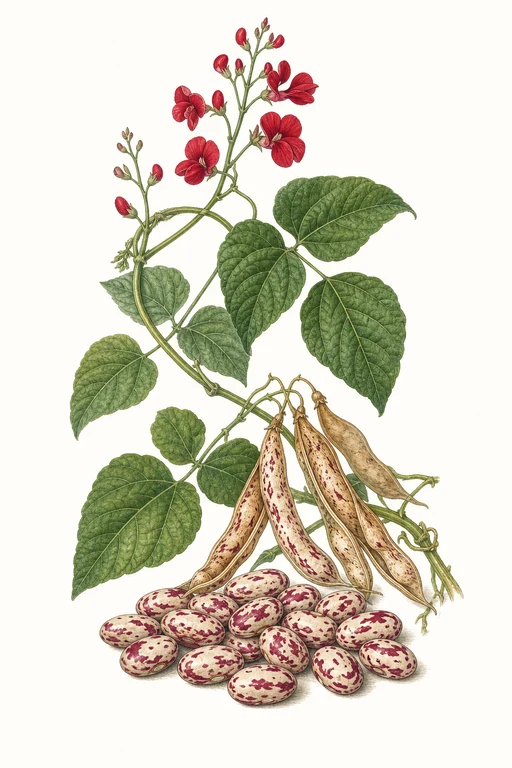
A slow-simmering beauty in the garden—Crimson Flowered Borlotto brings a vivid, painterly show of crimson blossoms that give way to richly patterned pods and, ultimately, beans with a warm, creamy base and bold crimson flecking.
When dried, the seeds develop a firm, satisfying bite and a mellow, nutty depth that shines in hearty dry-bean preparations and pantry staples. Grow this variety for its striking flowering display and its distinctive, speckled harvest that feels as special as it tastes.
Light: Full SunMaturity: 90 DaysHabit: Bush
Crop Dates : 2a
| Milestone | Date |
|---|---|
| Start Indoors | Direct Sow |
| Last Frost | May 25th |
| Transplant / Sow Outdoors | May 25th |
| Harvest Begins | Aug 23rd |
| Harvest Ends | Aug 29th |
Crop Details
| Trait | Value |
|---|---|
| Days to Maturity | 90 |
| Sun Requirements | Full Sun |
| Growth Habit | Bush |
| Support Needed | None |
| Planting Depth | Normal |
| Germination Temp (°F) | 75 |
| Min Soil Temp (°F) | 60 |
| Min Night Temp (°F) | 50 |
| Harden Off (days) | Not Required |
Culinary Notes

Chef's Note
Crimson Flowered Borlotto is built for the long simmer: the dry seed holds its shape better than many softer beans while turning luxuriously creamy in the pot. Expect warm, nutty flavor that plays perfectly with smoky pork and a tomato-leaning base—so it doesn’t collapse into mush in a stew.

Best Uses
- slow-simmered dry-bean stews
- thick, spoonable bean soups (blend a portion for body)
- toasted-and-braised beans with bacon or smoked pork
- bean salads where they’ll hold texture under vinaigrette

Flavor Profile

Frequently Asked Questions
What pest or disease most often affects Phaseolus vulgaris (borlotto beans), and how can I control it?
How often should I water Phaseolus vulgaris during the main growing phase?
How do I tell when Crimson Flowered Borlotto (Phaseolus vulgaris) is ready to harvest?
Sowing Tips

Transplant Conditions
Wait until soil reaches 60°F and nights stay above 50°F before moving outdoors.
Expert Note

For best pod fill and clean dry beans, keep soil evenly moist until flowering, then taper watering as pods mature.