
Crimson Giant
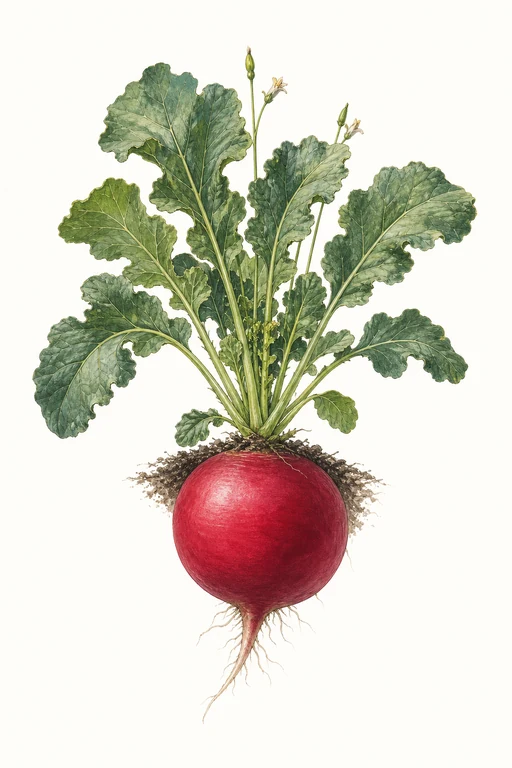
Peppery-crisp and richly vivid, Crimson Giant radish forms a bold, ruby-red globe that seems to glow against its cool green foliage.
The flesh stays tender and juicy with a clean, refreshing bite—ideal for bright, quick salads and vibrant garnish. At just about 28 days, this market-class radish delivers fast, satisfying harvests with a striking color that makes every platter look freshly dressed.
Light: Full SunMaturity: 28 DaysHabit: Taproot
Crop Dates : 5b
| Milestone | Date |
|---|---|
| Start Indoors | Direct Sow |
| Last Frost | May 4th |
| Transplant / Sow Outdoors | May 4th |
| Harvest Begins | Jun 1st |
| Harvest Ends | Oct 5th |
Crop Details
| Trait | Value |
|---|---|
| Days to Maturity | 28 |
| Sun Requirements | Full Sun |
| Growth Habit | Taproot |
| Support Needed | None |
| Planting Depth | Normal |
| Germination Temp (°F) | 55 |
| Min Soil Temp (°F) | 40 |
| Min Night Temp (°F) | 28 |
| Harden Off (days) | Not Required |
Culinary Notes

Chef's Note
Crimson Giant is the radish you reach for when you want heat that stays bright—its juicy crunch doesn’t collapse into mush, even when dressed and served quickly. It’s built for sharp, clean partners (citrus, vinegar, dairy) that tame the pepper without sanding off the snap.

Best Uses
- thin slices on buttered rye with flaky salt
- ice-cold salad radish with citrus vinaigrette
- grated radish-jicama style slaw for tacos and bowls
- quick pickling for a ruby, snappy relish

Flavor Profile

Kitchen Pairings
Frequently Asked Questions
Why are my Raphanus sativus (Crimson Giant radish) plants getting leaf spots or mildew, and what should I do?
How often should I water Raphanus sativus during the main growing phase to keep Crimson Giant roots crisp?
How can I tell when my Crimson Giant radishes (Raphanus sativus) are ready to harvest?
Sowing Tips

Transplant Conditions
Wait until soil reaches 40°F and nights stay above 28°F before moving outdoors.
Expert Note

For the largest, tender Crimson Giant roots, keep soil evenly moist and avoid heat spikes—radishes get pithy if stressed.