
Curled
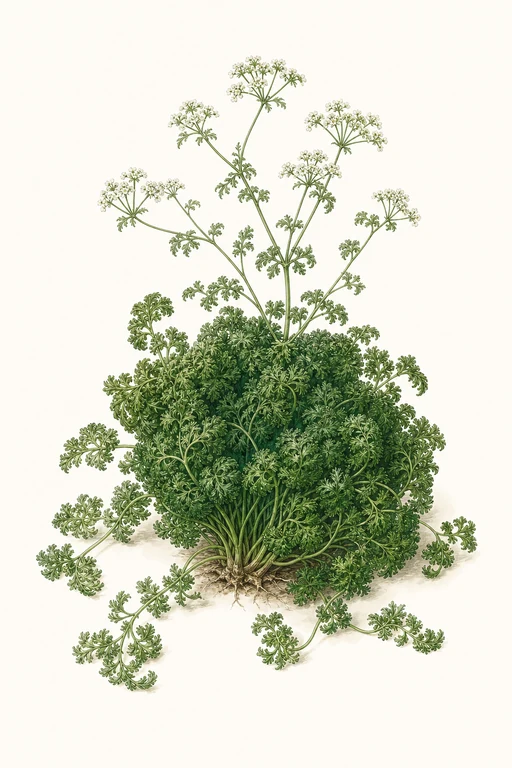
Fragrant and feather-light, Curled Chervil unfurls into delicate, tightly curled leaves with a cool, anise-laced aroma that feels instantly fresh.
Expect tender, springy texture and a vivid, finely lacy look that holds its character from garden to bowl, ideal for bright garnishing and herb-forward sauces. Grow Curled for its distinctive leaf curl and quick 45-day turnaround—an elegant, aromatic addition to the home garden’s edible palette.
Light: Part SunMaturity: 45 DaysHabit: Rosette
Planting schedules and alerts are optimized for Columbus (Zone 6b).
Crop Dates
| Milestone | Date |
|---|---|
| Start Indoors | Mar 28th |
| Last Frost | Apr 25th |
| Transplant / Sow Outdoors | May 2nd |
| Harvest Begins | Jun 16th |
| Harvest Ends | Oct 16th |
Crop Details
| Trait | Value |
|---|---|
| Days to Maturity | 45 |
| Sun Requirements | Part Sun |
| Growth Habit | Rosette |
| Support Needed | None |
| Planting Depth | Surface |
| Germination Temp (°F) | 70 |
| Min Soil Temp (°F) | 40 |
| Min Night Temp (°F) | 35 |
| Harden Off (days) | 6 |
Culinary Notes

Chef's Note
Curled Chervil’s tight, lacy leaves bring that unmistakable anise-cool perfume—best when treated like a finishing herb, not a long-cook component. Warm it gently (or add off-heat) and it stays bright and feathered instead of going dull or grassy.

Best Uses
- finishing soups and broths at the last second so it stays silky and fragrant
- chervil-forward herb sauce (blend with butter/cream and a little lemon, then warm gently)
- tossing into delicate green salads that don’t overpower—pair with a light vinaigrette
- folding into soft scrambles or omelet off-heat for quick melt-in fragrance

Flavor Profile

Frequently Asked Questions
What pests or diseases commonly affect Anthriscus cerefolium (curled/chervil), and how can I manage them?
How often should I water curled/chervil (Anthriscus cerefolium) during the main growing phase?
How can I tell when Anthriscus cerefolium (curled) is ready to harvest?
Sowing Tips

Transplant Conditions
Wait until soil reaches 40°F and nights stay above 35°F before moving outdoors. Harden off for 6 days first.
Expert Note

Keep chervil evenly moist and grow it in cool weather (it bolts quickly in summer heat); successive sow every 2–3 weeks for a steady harvest.