
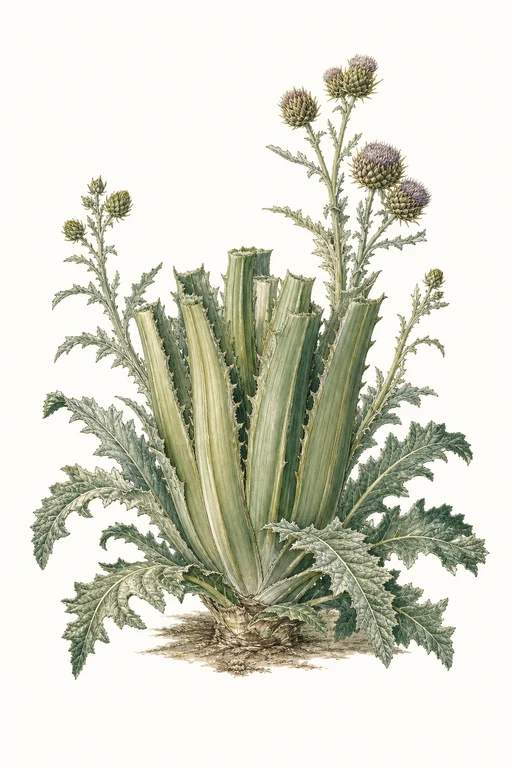
Cynara cardunculus var. altilis
Unfurling from a sturdy rosette, Cardoon ‘Cynara cardunculus var.
altilis’ offers a dramatic, silvery-green presence with tender, lightly bitter hearts that grow more mellow as plants mature. Expect a crisp, succulent texture with a refined, earthy flavor that shines in bold preparations—roasted until bronzed, simmered into silky sauces, or preserved for tangy, long-lasting bites. A striking garden centerpiece at 90 days, it rewards patience with harvestable stems and hearts that feel as luxurious as they look.
Light: Full SunMaturity: 90 DaysHabit: Rosette
Planting schedules and alerts are optimized for Columbus (Zone 6b).
Crop Dates
| Milestone | Date |
|---|---|
| Start Indoors | Mar 14th |
| Last Frost | Apr 25th |
| Transplant / Sow Outdoors | Apr 18th |
| Harvest Begins | Jul 17th |
| Harvest Ends | Oct 16th |
Crop Details
| Trait | Value |
|---|---|
| Days to Maturity | 90 |
| Sun Requirements | Full Sun |
| Growth Habit | Rosette |
| Support Needed | None |
| Planting Depth | Normal |
| Germination Temp (°F) | 70 |
| Min Soil Temp (°F) | 45 |
| Min Night Temp (°F) | 28 |
| Harden Off (days) | 5 |
Culinary Notes

Chef's Note
Cardoon’s bitterness is the whole point: when you roast or braise it, those stems go from crisp-succulent to creamy-soft while the flavor turns artichoke-like instead of harsh. Pair with lemon, olive oil, and salty umami (anchovy or parmesan) to sharpen and round the edges without muting the signature bite.

Best Uses
- deep roast until bronzed and slightly caramelized
- braise in stock to turn stems into spoonable tenderness
- simmer into a velvety sauce for pasta or gratins
- pickle or preserve for sharp, long-lasting tang

Flavor Profile

Kitchen Pairings
Frequently Asked Questions
What pest or disease most commonly affects artichoke (Cynara spp.) and what should I do if I see symptoms?
How often should I water artichokes during the main growing phase?
How can I tell when artichoke heads are ready to harvest?
Sowing Tips

Transplant Conditions
Wait until soil reaches 45°F and nights stay above 28°F before moving outdoors. Harden off for 5 days first.
Expert Note

For thick, blanched stalks, transplant early and then “earth up” or cover stalks in late season once plants are well-established.