
Cynara cardunculus
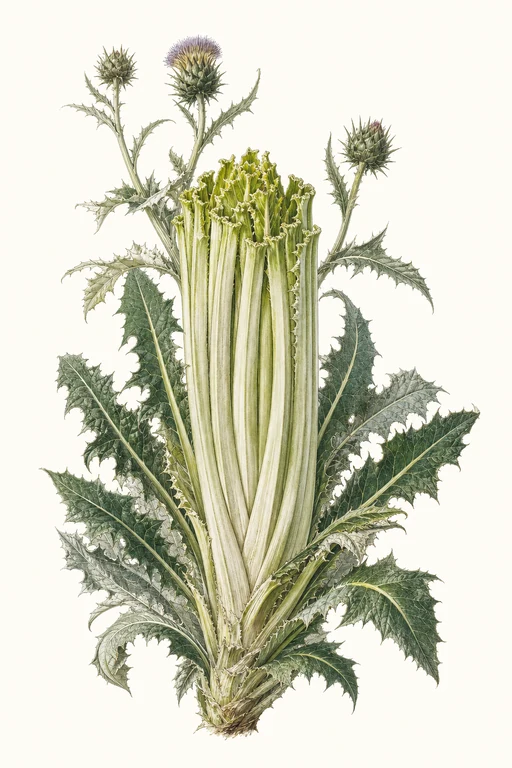
Slow-grown for a stately, garden-filling presence, Cardoon delivers a dramatic, tender heart with a subtly sweet, artichoke-like allure and a pleasantly vegetal snap.
Expect thick, upright ribs wrapped in silvery-green to pale green tones, with a firm, succulent texture that shines in long, patient preparations—ideal for roasting, braising, and turning into rich sauces or savory gratins. A true showpiece for growers who love bold flavor and architectural plants that reward the season’s wait.
Light: Full SunMaturity: 150 DaysHabit: Upright
Planting schedules and alerts are optimized for Columbus (Zone 6b).
Crop Dates
| Milestone | Date |
|---|---|
| Start Indoors | Mar 21st |
| Last Frost | Apr 25th |
| Transplant / Sow Outdoors | Apr 18th |
| Harvest Begins | Sep 15th |
| Harvest Ends | Oct 16th |
Crop Details
| Trait | Value |
|---|---|
| Days to Maturity | 150 |
| Sun Requirements | Full Sun |
| Growth Habit | Upright |
| Support Needed | None |
| Planting Depth | Normal |
| Germination Temp (°F) | 70 |
| Min Soil Temp (°F) | 40 |
| Min Night Temp (°F) | 30 |
| Harden Off (days) | 6 |
Culinary Notes

Chef's Note
Cardoon’s thick ribs cook down into something almost meatlike—firm at first, then succulent—so it earns long, patient heat. Pair its artichoke-adjacent sweetness and gentle bitterness with fat and salt (butter/cheese/anchovy) and brightness (lemon or white wine) so the flavor stays vivid, not muddy.

Best Uses
- slow braise until the ribs are silk-tender and sauce-ready
- roast wedges for caramelized edges with a still-firm bite
- creamy gratin or béchamel-style bake where bitterness gets cushioned by fat
- turn into a thick, reduced dip/sauce for bread and grilled meats

Flavor Profile

Kitchen Pairings
Frequently Asked Questions
What pest or disease commonly affects Cynara scolymus (artichoke), and how can I manage it?
How often should I water Cynara scolymus during the main growing phase, and what soil moisture level should I maintain?
How do I tell when Cynara scolymus is ready to harvest?
Sowing Tips

Transplant Conditions
Wait until soil reaches 40°F and nights stay above 30°F before moving outdoors. Harden off for 6 days first.
Expert Note

For tender, less-bitter stalks, blanch by tying stalks together and covering the lower portion once plants are established.