
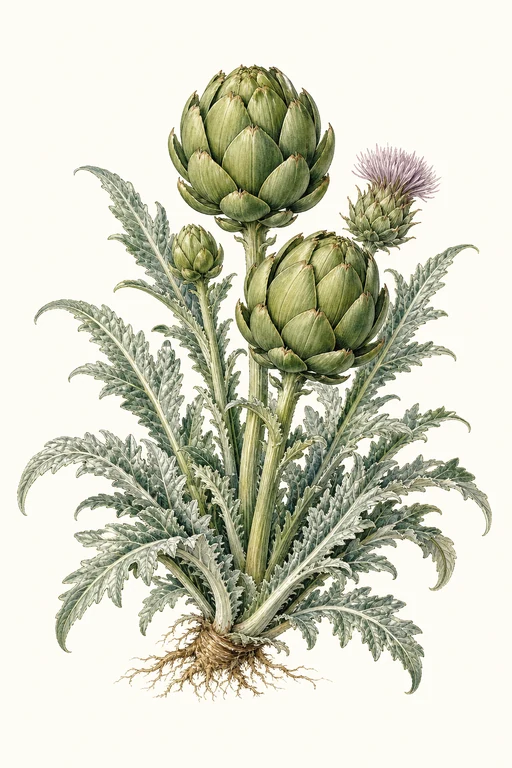
Cynara scolymus 'Spineless'
Velvety, spineless buds arrive with a regal, nutty depth and a tender, meaty heart that feels plush rather than fibrous.
Cynara scolymus ‘Spineless’ forms large, rounded heads with a refined, buttery texture—ideal for roasting to bring out its earthy sweetness, or for fresh preparations where its delicate character shines. Grow it for showy garden presence and for harvests that reward patience with every lush, green bloom.
Light: Full SunMaturity: 90 DaysHabit: Clumping
Planting schedules and alerts are optimized for Columbus (Zone 6b).
Crop Dates
| Milestone | Date |
|---|---|
| Start Indoors | Direct Sow |
| Last Frost | Apr 25th |
| Transplant / Sow Outdoors | Apr 25th |
| Harvest Begins | Jul 24th |
| Harvest Ends | Oct 16th |
Crop Details
| Trait | Value |
|---|---|
| Days to Maturity | 90 |
| Sun Requirements | Full Sun |
| Growth Habit | Clumping |
| Support Needed | None |
| Planting Depth | Normal |
| Germination Temp (°F) | 70 |
| Min Soil Temp (°F) | 45 |
| Min Night Temp (°F) | 35 |
| Harden Off (days) | 7 |
Culinary Notes

Chef's Note
With a spineless, tender build and that unmistakable Cynara bitterness, this is the artichoke you roast for maximum browned, nutty payoff—the heart stays plush and spoon-friendly. Pair it with lemon and olive oil (or butter + thyme) to keep the green edge bright while the nutty depth fills out every bite.

Best Uses
- hot-roasted artichokes with browned edges for a plush, caramelized edge
- braises or confit-style simmering until the base is spoon-tender
- griddled/charred hearts for smoky bitterness that stays juicy
- thin shaved or lightly steamed leaves for a refined salad texture

Flavor Profile

Kitchen Pairings
Frequently Asked Questions
What pest or disease most often affects Cynara scolymus (artichoke) and how can I control it?
How often should I water Cynara scolymus during its main growing period?
How do I know when artichoke heads are ready to harvest?
Sowing Tips

Transplant Conditions
Wait until soil reaches 45°F and nights stay above 35°F before moving outdoors. Harden off for 7 days first.
Expert Note

For best yields, grow as a perennial where winters are mild, and in colder zones give plants a sunny, well-drained bed plus winter protection.