
Da Hulu
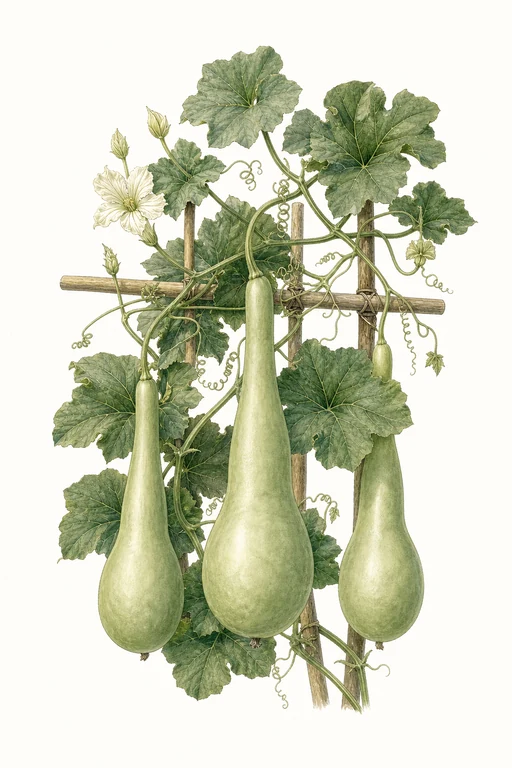
Sink your senses into Da Hulu’s long, graceful gourds—cool, pale-green skin with a faintly waxy sheen that promises a clean, mild sweetness.
At maturity, the flesh turns tender and pleasantly fine-textured, ideal for turning into comforting spoonable preparations and for flavor-forward sauces where its gentle character shines. Grow Da Hulu for a steady harvest of elegant bottle-shaped fruit that looks as good on the vine as it tastes in the bowl.
Light: Full SunMaturity: 90 DaysHabit: Vine
Planting schedules and alerts are optimized for Columbus (Zone 6b).
Crop Dates
| Milestone | Date |
|---|---|
| Start Indoors | Apr 11th |
| Last Frost | Apr 25th |
| Transplant / Sow Outdoors | Apr 25th |
| Harvest Begins | Jul 24th |
| Harvest Ends | Oct 16th |
Crop Details
| Trait | Value |
|---|---|
| Days to Maturity | 90 |
| Sun Requirements | Full Sun |
| Growth Habit | Vine |
| Support Needed | Trellis |
| Planting Depth | Normal |
| Germination Temp (°F) | 75 |
| Min Soil Temp (°F) | 65 |
| Min Night Temp (°F) | 55 |
| Harden Off (days) | 10 |
Culinary Notes

Chef's Note
Da Hulu’s bottle-gourd flesh is built to disappear into the pot—softening into a spoonable, slightly silky body while staying pleasantly mild. Season it aggressively and finish with something bright (vinegar or pepper) so the dish tastes awake, not bland.

Best Uses
- quick sauté and finish with a sharp acid to keep the flesh from going dull
- spoonable braises or soups (the flesh collapses into a silky, cohesive texture)
- thickened, reduction-style sauces where it carries aromatics
- raw shave for crisp salads when very young

Flavor Profile

Kitchen Pairings
Frequently Asked Questions
How do I prevent and treat powdery mildew on Lagenaria siceraria (Italian edible gourd)?
How often should I water Lagenaria siceraria during the main growing phase?
What are the signs that Lagenaria siceraria is ready to harvest?
Sowing Tips

Transplant Conditions
Wait until soil reaches 65°F and nights stay above 55°F before moving outdoors. Harden off for 10 days first.

Direct Sow Preferred
Sensitive roots — does not transplant well. If starting indoors, use biodegradable pots and disturb roots as little as possible when moving outdoors.
Expert Note

Start bottle gourds only when soil is reliably warm, then keep vines evenly watered early to prevent fruiting delays and misshapen gourds.